
You are reading about
Kornkaew (Dusit Campus)
- Trilingual: taught in Thai, English daily, Mandarin weekly
- Montessori in a Thai context, mostly outdoors in the garden
- The original campus, established 1984
- 2 terms (May | Nov)
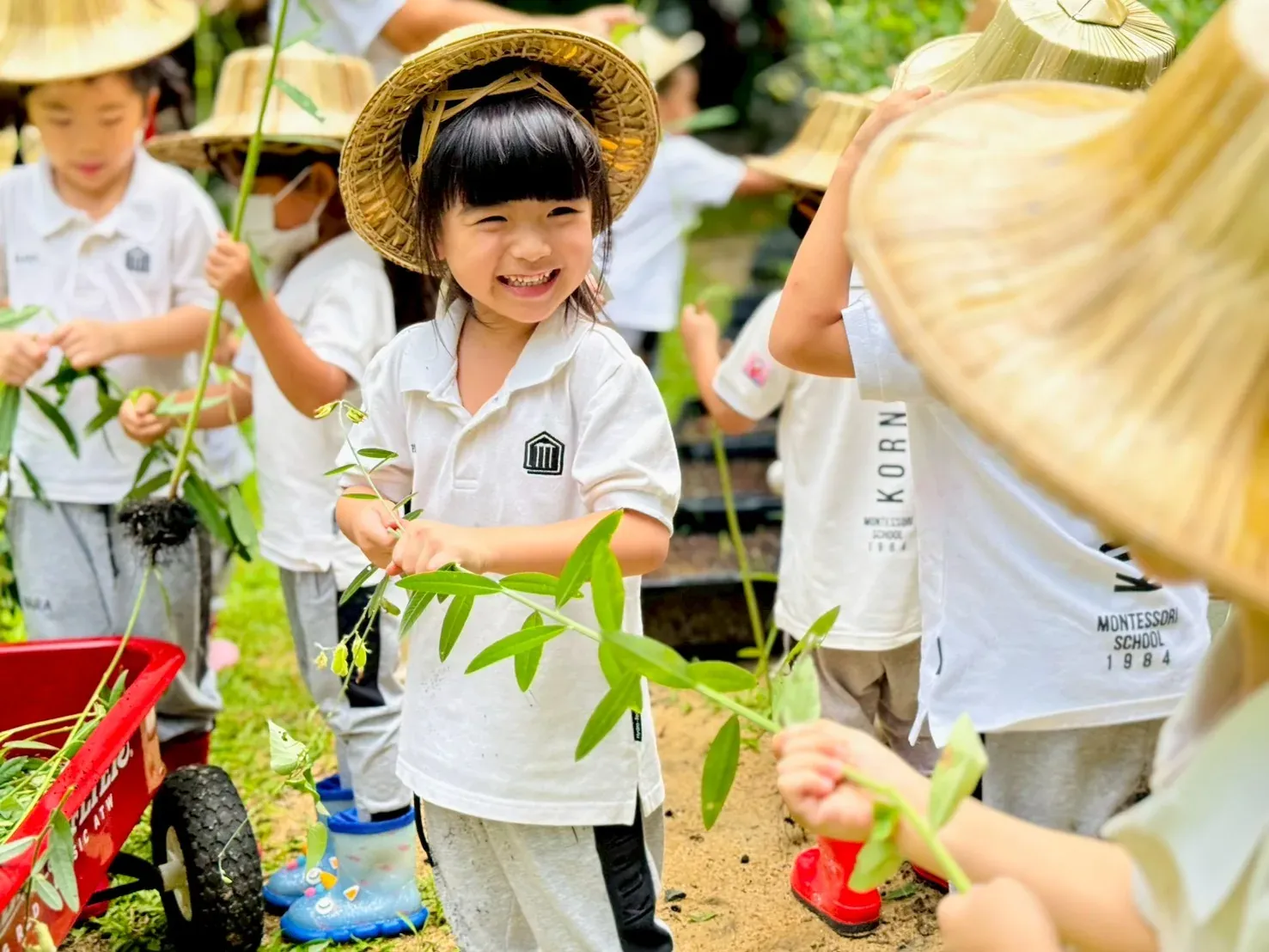
Kornkaew Montessori School - Dusit, Bangkok
A trilingual Montessori school for children aged 1 to 6: lessons taught in Thai, with English daily and Mandarin weekly. Most learning happens outdoors in the garden. Established 1984, certified by the Ministry of Education, and a Montessori Demonstration School since 1999.
 Ages 1-6years
 MontessoriDemonstration School
 TrilingualThai | English | Mandarin
 Small groups1:3 average ratio
 2 termsMay | Nov
 Dusit, BangkokRama 5 Road
Lessons in Thai, with English daily and Mandarin weekly, learnt mostly outdoors.

Small groups at 1:3, a health check every morning and strict safeguarding.

Founded in Dusit in 1984 by Dr Kamkeo Kraisoraphong. 40+ years of care.

Certified by the Ministry of Education in 1984, assessed by ONESQA, and a Montessori Demonstration School since 1999.

Educators trained specifically to nurture children aged 1 to 6.

A close community in Dusit, and two generations: many of today's parents were once Kornkaew pupils.
Three languages, learnt where children grow best: outdoors.
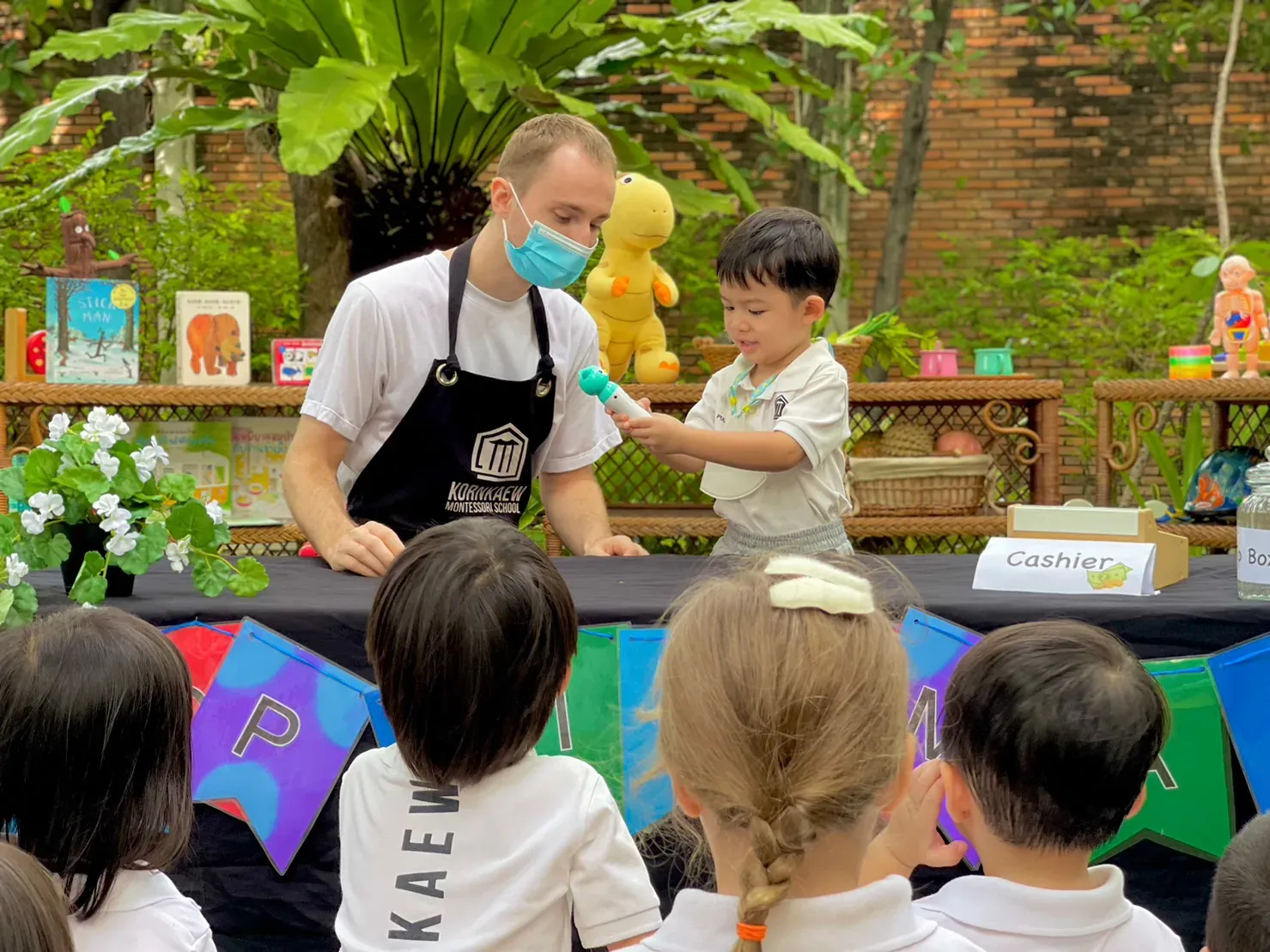
Lessons are taught in Thai, the language of the school day, with English every day and Mandarin once a week.
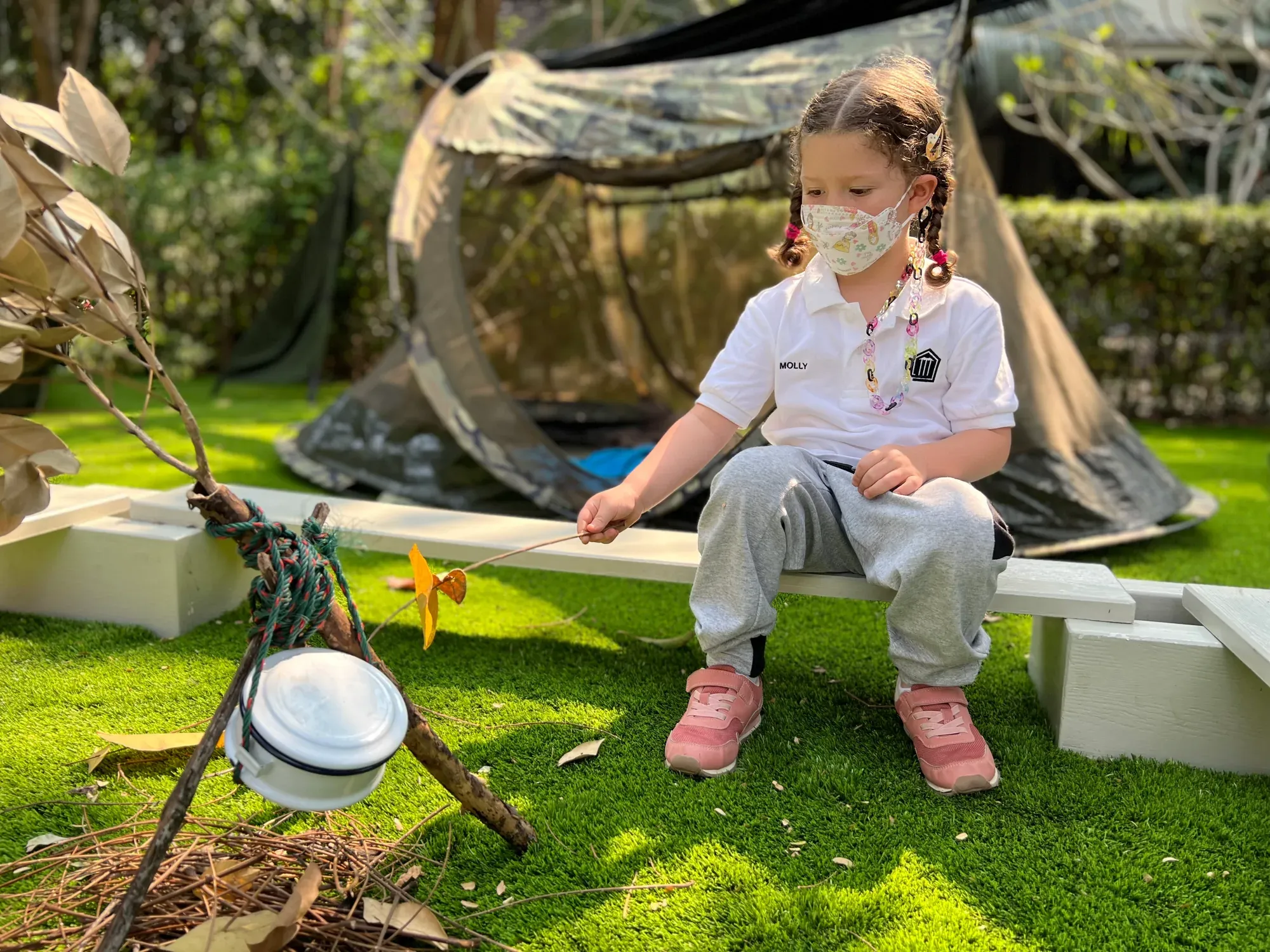
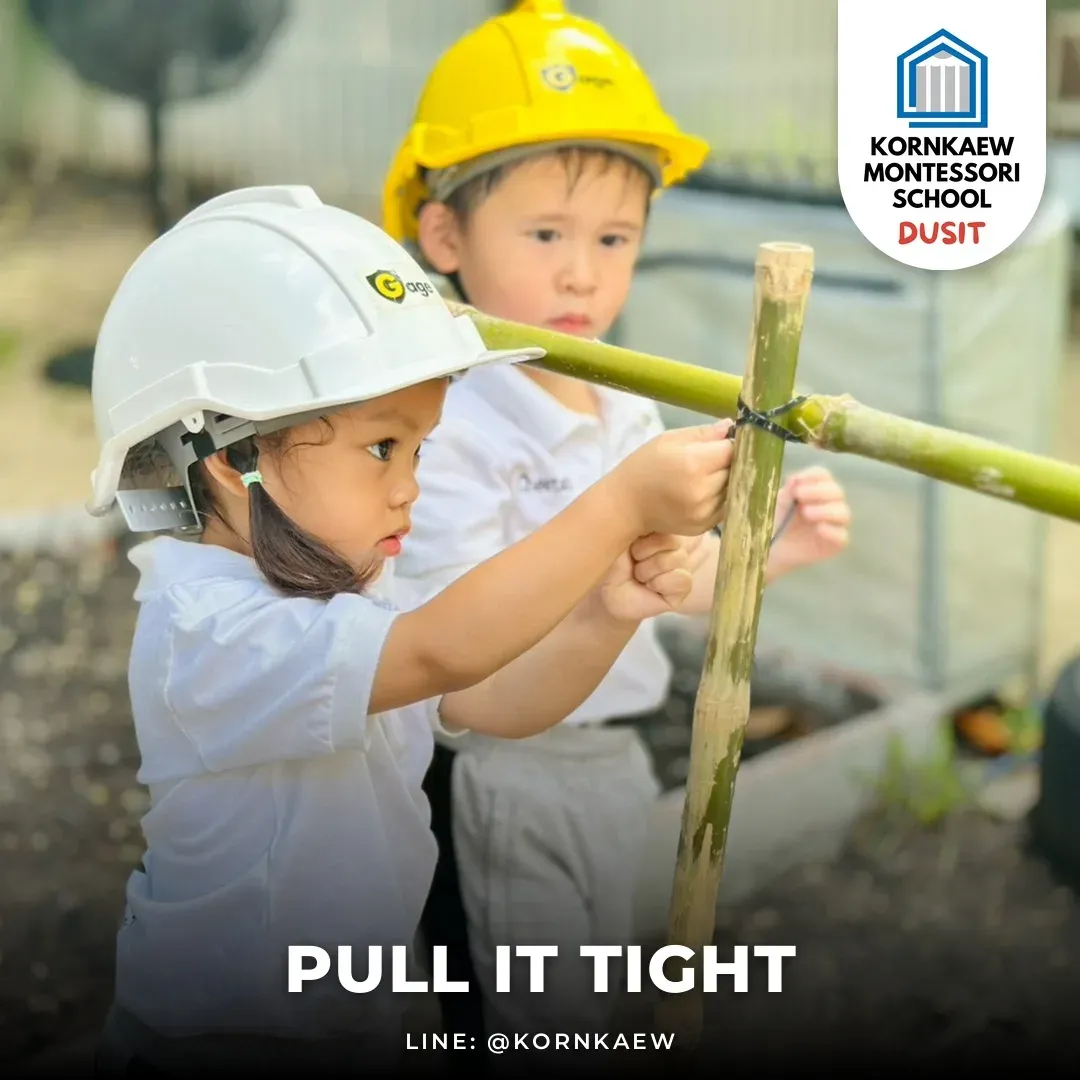
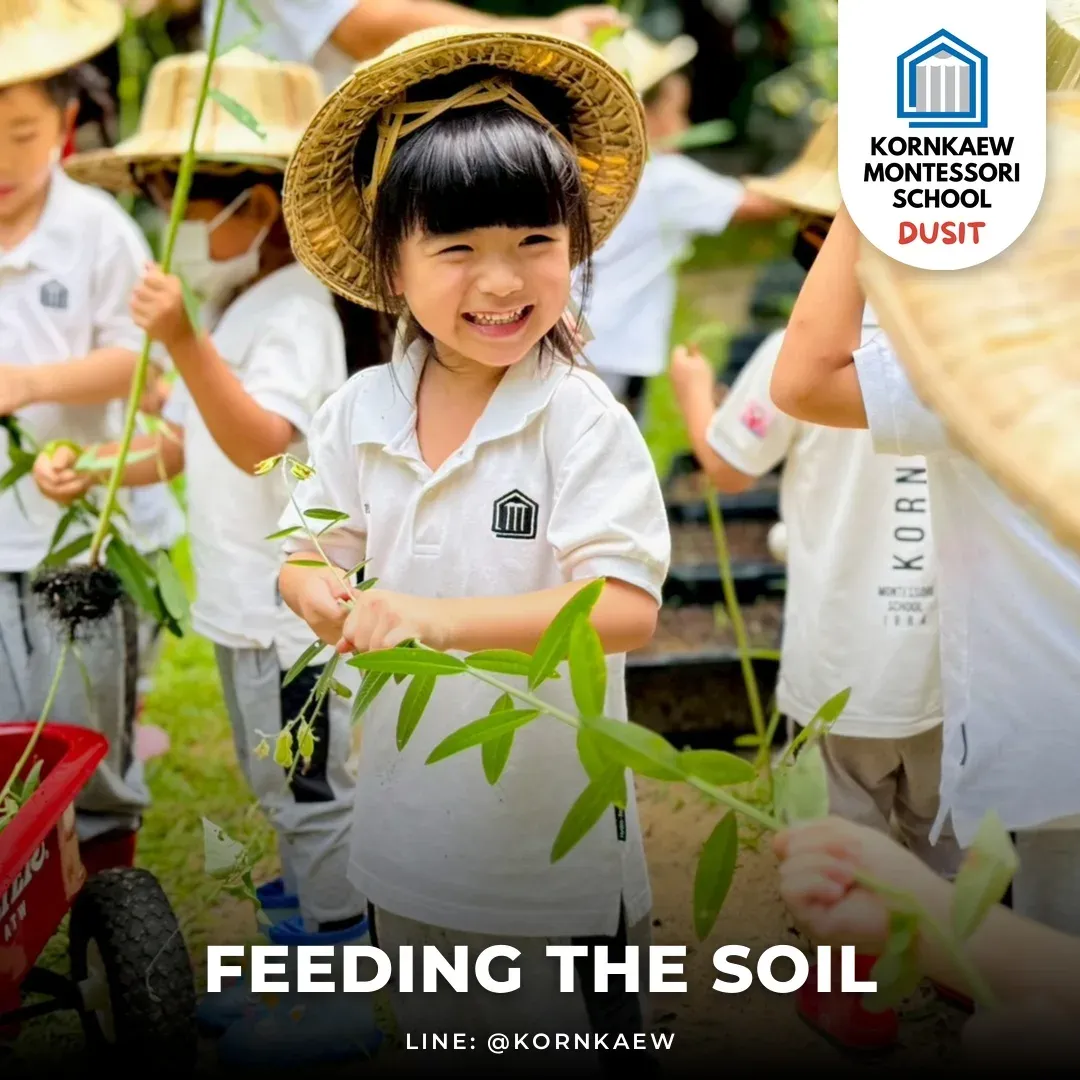
Most of the school day happens outdoors, in the garden: planting, tending, observing and harvesting.
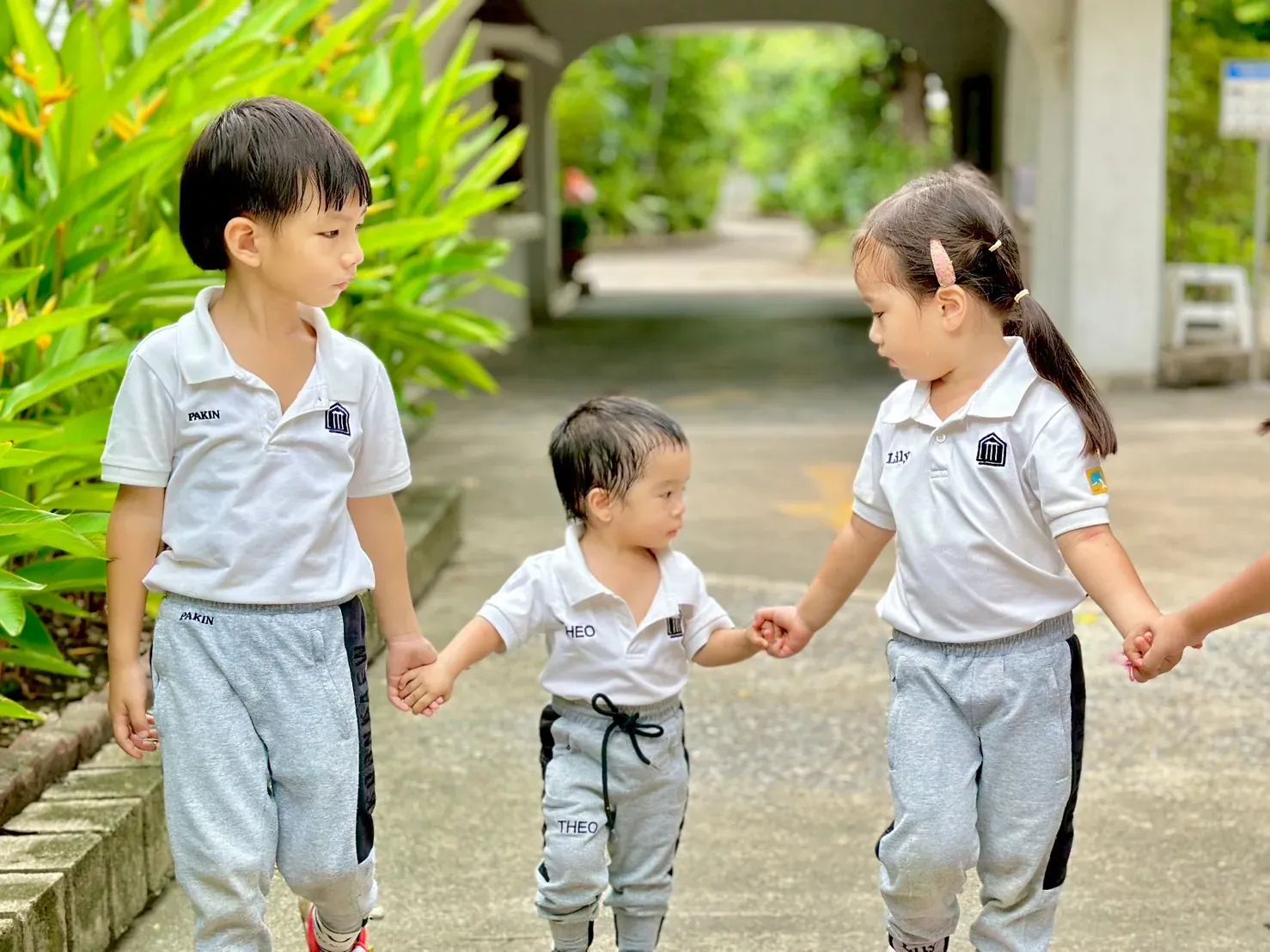
Younger children learn from older ones, and older children consolidate what they know by teaching it.
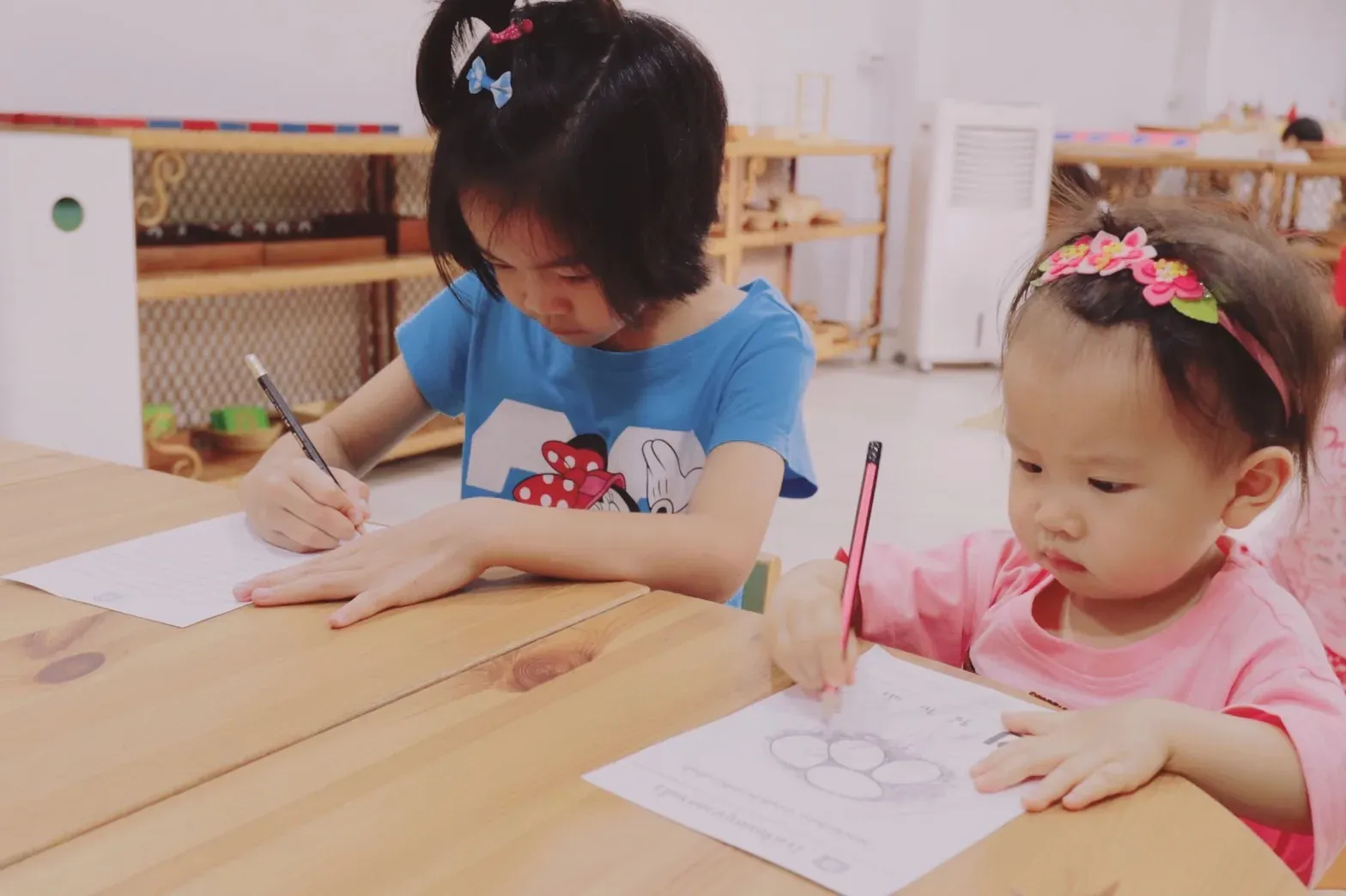
Each child progresses at their own pace, guided through their critical periods by trained educators.
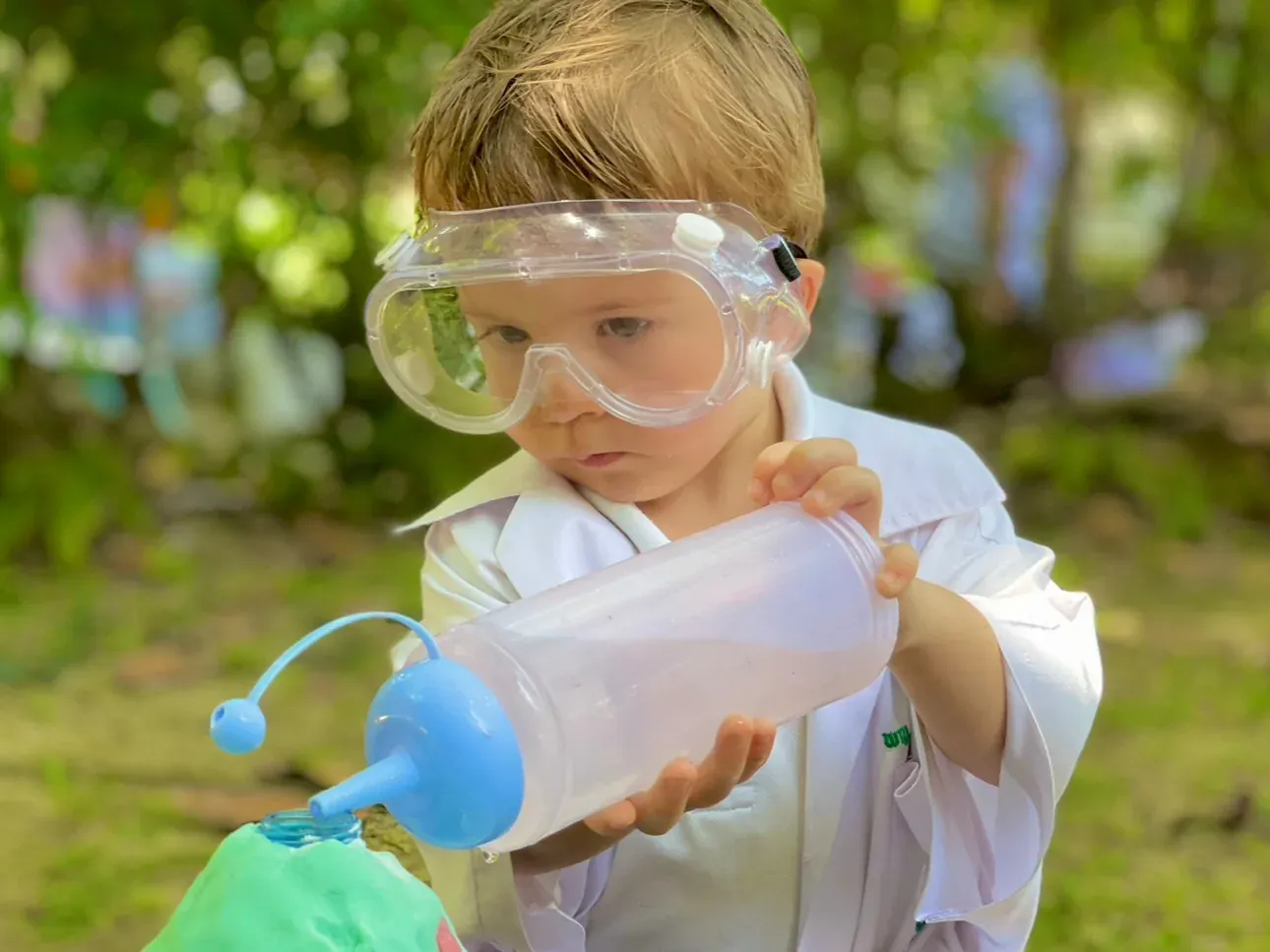
Concrete before abstract, with specially prepared Montessori materials.
Learning starts with the hands. Worksheets follow, designed by our teachers for each activity and personalised to each child’s age and level. There are no tests: instead, the teaching team assesses every child regularly, so we know how each one is developing and which milestone comes next.
Every day has the same shape: the garden first, three lessons through the morning, lunch together, then Social Giving. The morning lessons change through the week, so every child meets every subject.
Arriving. Children arrive between 7:15 and 8:15, to a warm welcome and a health check at the gate. The gate closes at 8:15.
Gardening. Every morning from 8:30 begins in the garden: planting, watering and looking after the beds.
The rest of the morning holds three lessons, one of each every day: the Montessori work cycle, the Creative Play Space, and a core activity or, on Fridays, an enrichment activity.
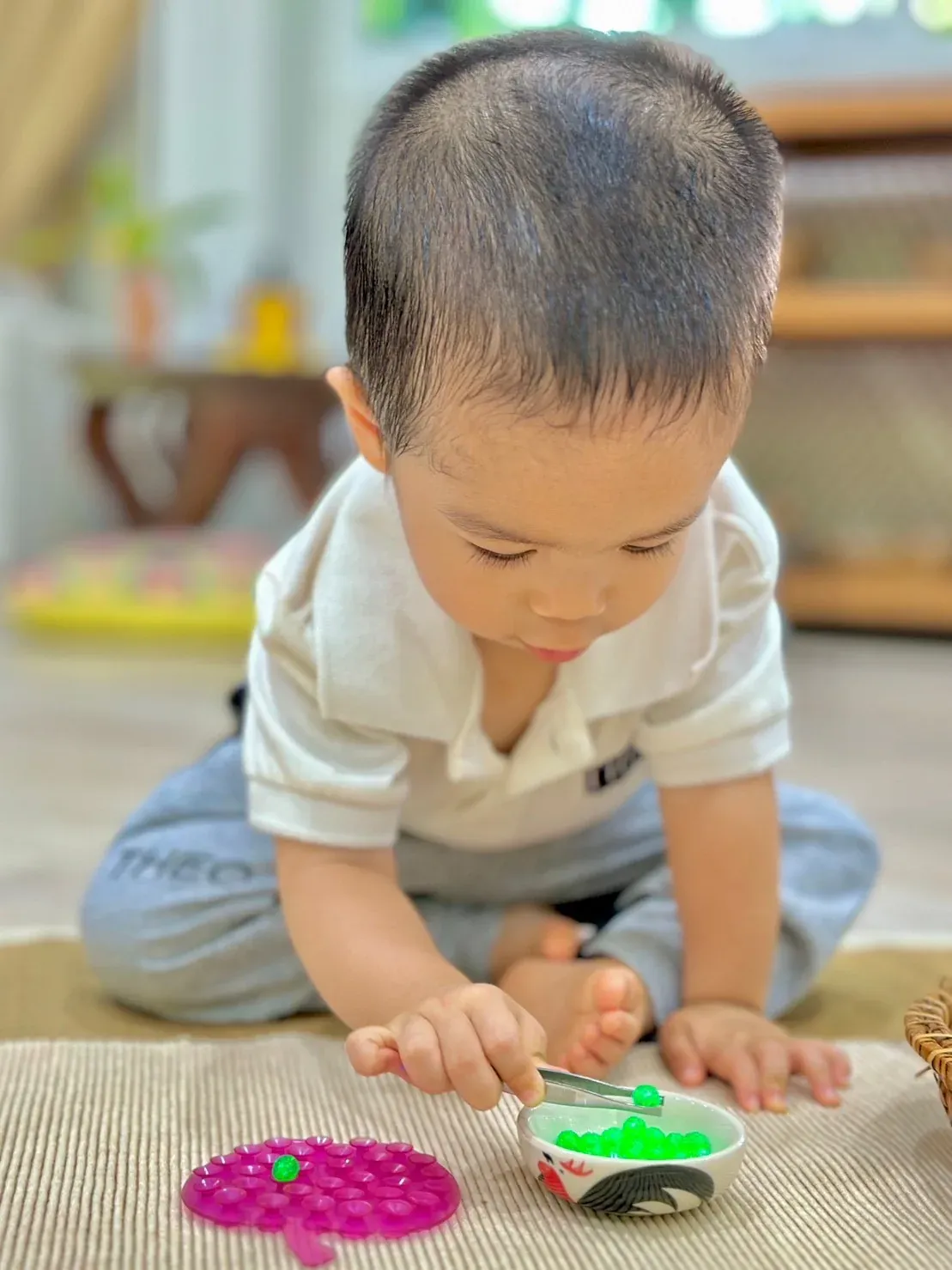
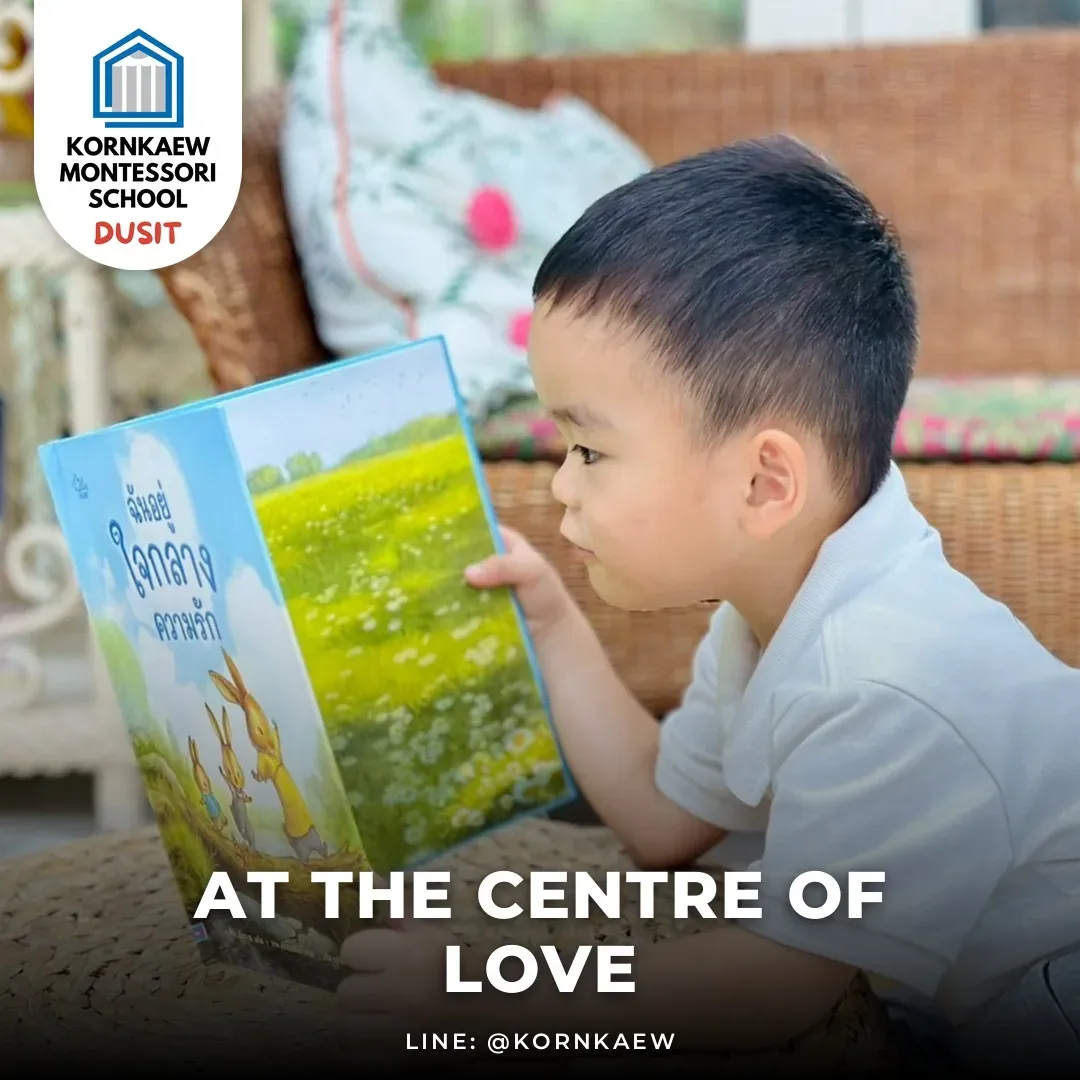
Each child chooses their own work and stays with it as long as it holds them, across the Montessori areas of learning: Practical Life, Sensorial and Academics.
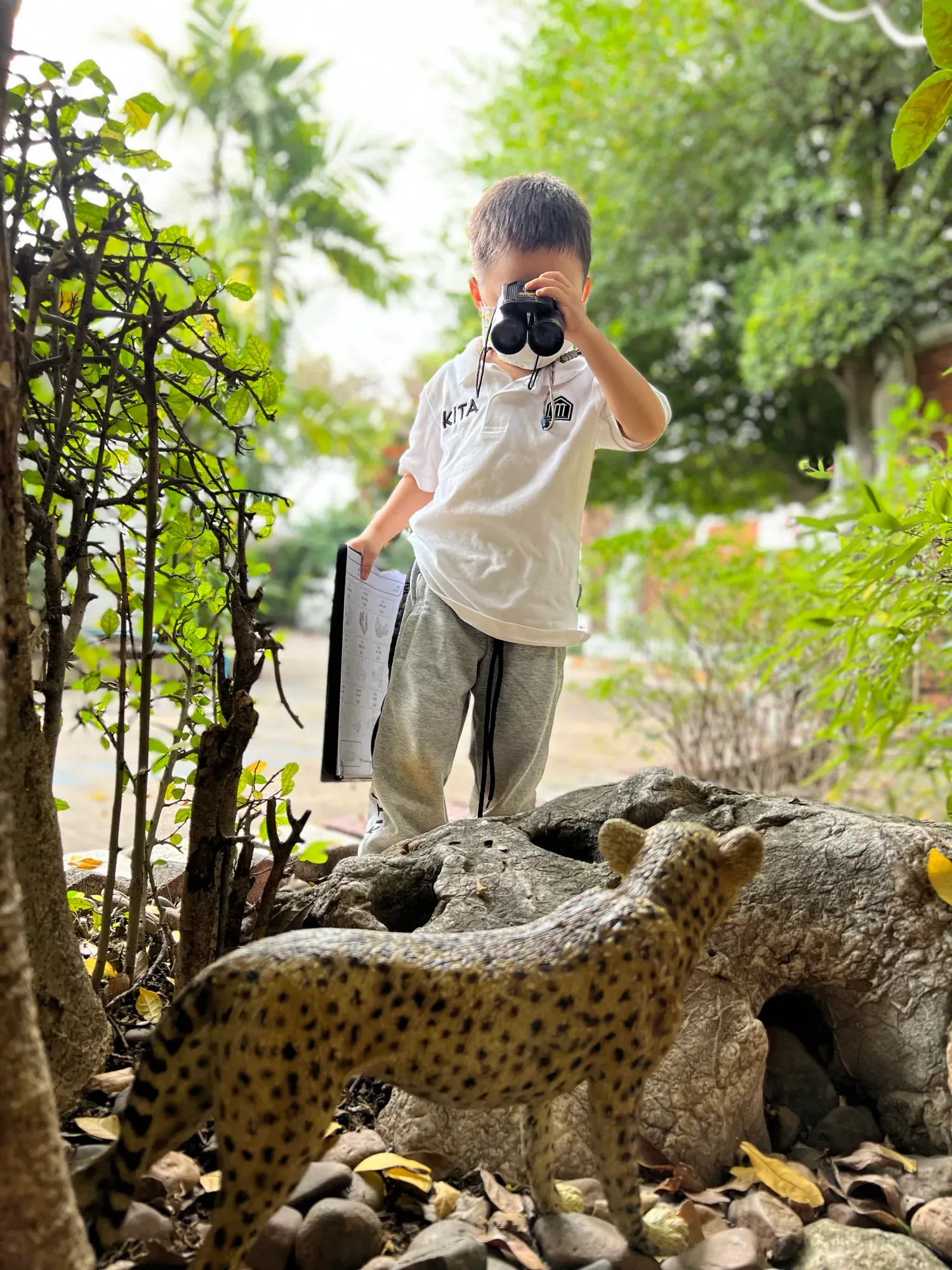
Thai on Monday, English on Tuesday, arithmetic on Wednesday and Mandarin on Thursday. English is not kept to its own lesson: it is used through the day in other lessons too.
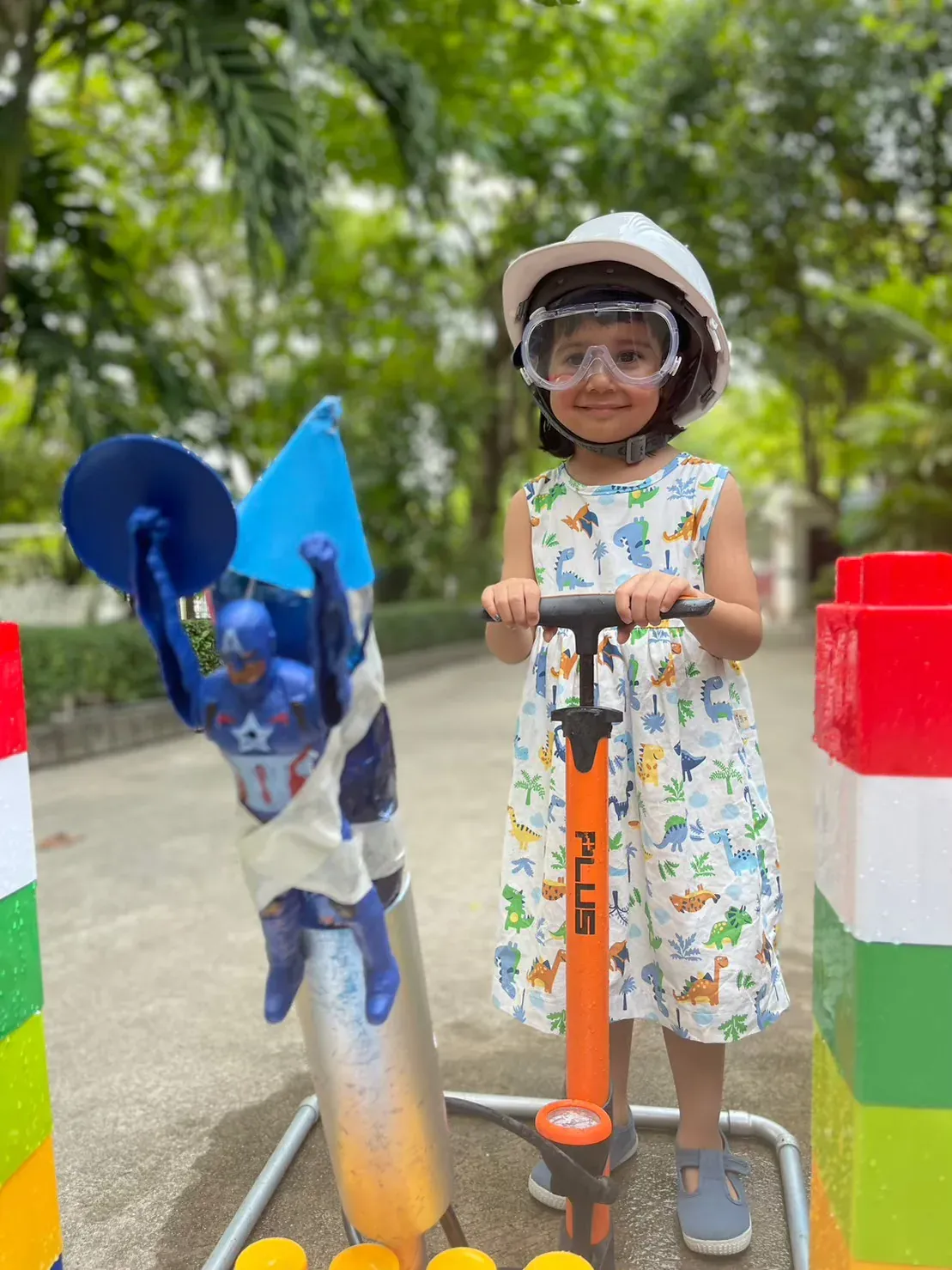
Friday mornings, in turn:
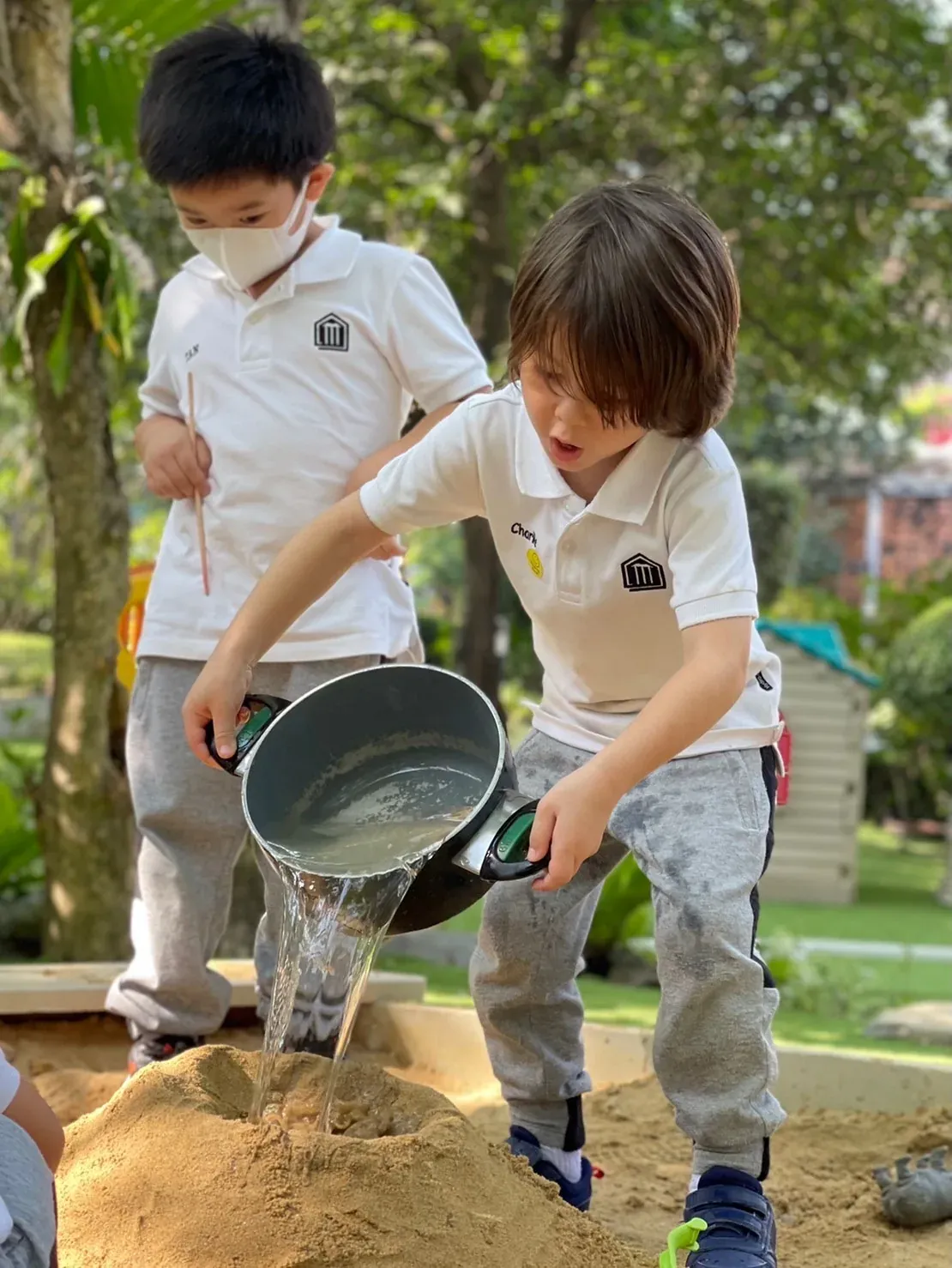
Play the children design themselves. They set up their own activity stations and invent the roles to go with them, and the science, maths, language and human skills arrive along the way.
Everyone eats together at 12:00. Lunch is cooked fresh every day in our own kitchen, with fresh fruit to finish.
Social Giving. From 13:00 the children look after their school: mopping the floors, sweeping the road and the garden, wiping the tables, cleaning the day’s equipment, washing the gardening boots, the dishes and the aprons. Real work that everyone depends on, done together.
School ends at 14:30. Children who still nap in the afternoon may go home after lunch, at 13:00, and those staying on for extra-curricular activities carry on until 17:00.
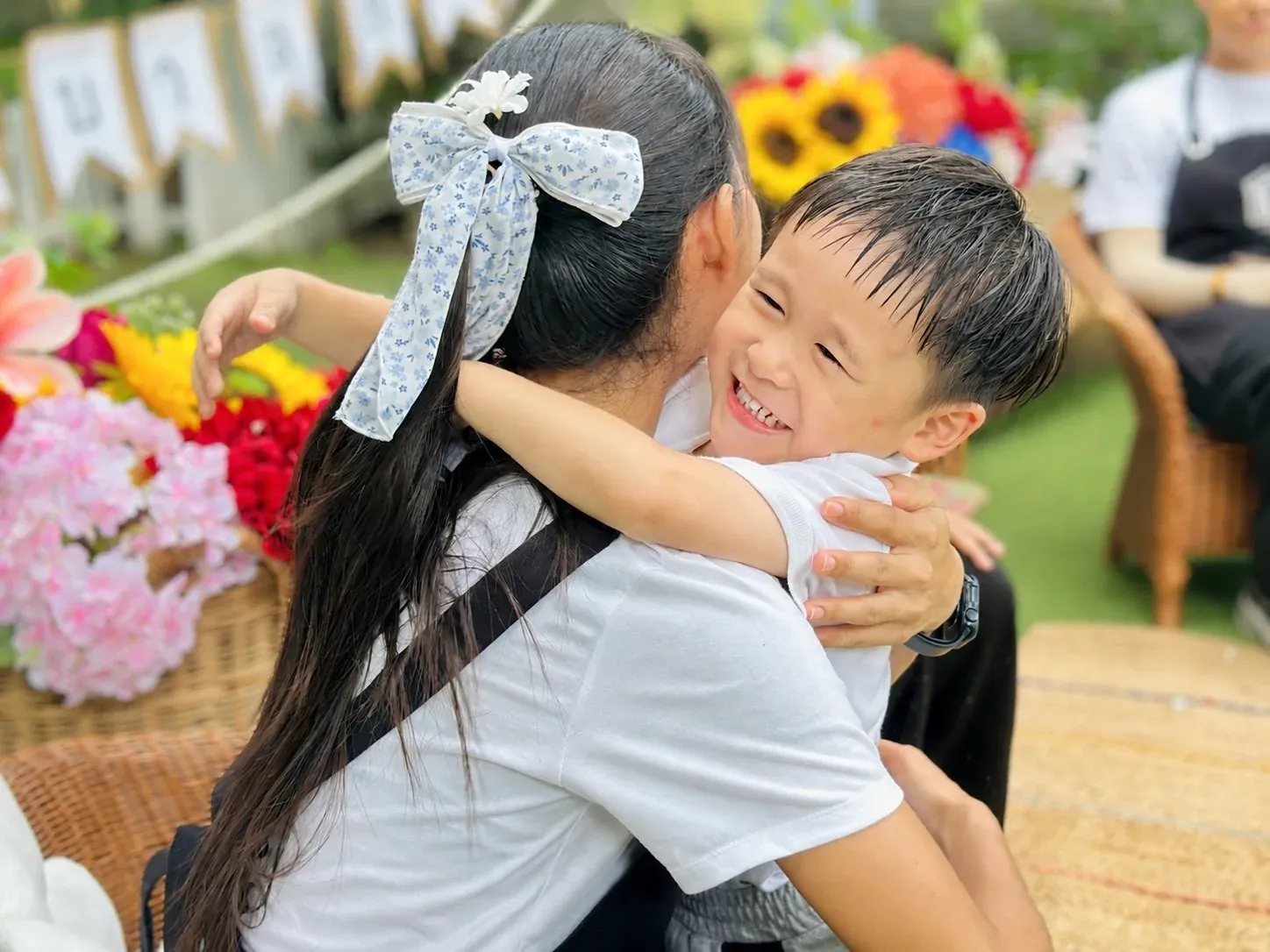
Every child known, safe and well looked after.
The latest moments from school, shared with our families every week.
Both campuses share the same Montessori foundations, the same family and over forty years of the same care. Each leads with a different strength.
You are reading about
Applications are welcome up to a year ahead. See the steps, the fees and what to prepare.
See the enrolment processWe welcome children aged 1 to 6. They do not need to be toilet-trained or speaking fluently to join: our teachers work with each family on both. The one practical requirement is that a child can walk independently.
Most families apply about a year before they would like their child to start. Children take in different skills at different ages, and starting earlier gives teachers more of those stages to work with, but the best time is the one that feels right for your family.
Yes. Private visits are held by appointment on weekday afternoons at 16:00, after classes, so we can give you our full attention while protecting our children's privacy. You will see a presentation about the school, then walk the classrooms and the garden. To book, message us on LINE: @kornkaew.
Thai is the language of instruction. English is used every day, in its own lesson and through other lessons too, and children have Mandarin once a week.
Every day, and then in depth each term. You can speak to your child's teachers at drop-off and pick-up, so anything on your mind is dealt with the same day. Photographs of the day go into a private group for parents, so you can see how the day actually went and keep those years. At the end of every term there is a parent-teacher meeting, where the teaching team takes you through a personalised report: what your child has done, the milestones they have reached and what comes next.
Children are with us until six. Most go on to Thai or bilingual primary schools in Bangkok, and some to international schools.
There is no half-day programme, but children who still nap in the afternoon may go home after lunch, at 13:00. School ends at 14:30, and children can stay on for extra-curricular activities until 17:00.
Every meal is cooked fresh in our own kitchen each day, from wholesome, minimally processed ingredients, and the menu rotates over four weeks. Instead of sweet snacks and desserts we serve fresh fruit. Please tell us about any allergies or dietary needs and we will plan around them.
Every new child joins the Transition Programme: four weeks in the holidays before their first term, with parents taking part too. Children get to know their teachers, their classmates and the shape of the day, and families get to know the school. The full process is on the enrolment page.
Visit us
77 Ranong 2, Rama 5 Rd., Dusit, Bangkok 10300
LINE @kornkaew
Tours run outside school hours, so you see the classrooms and the grounds without disturbing the children.
Book a private tour
Assessed and accredited by ONESQA. Appointed a Montessori Demonstration School in the Thai context in 1999 by the Office of the Education Council, Ministry of Education.

A member of the Thailand Association of Montessori Schools, established 1997.