
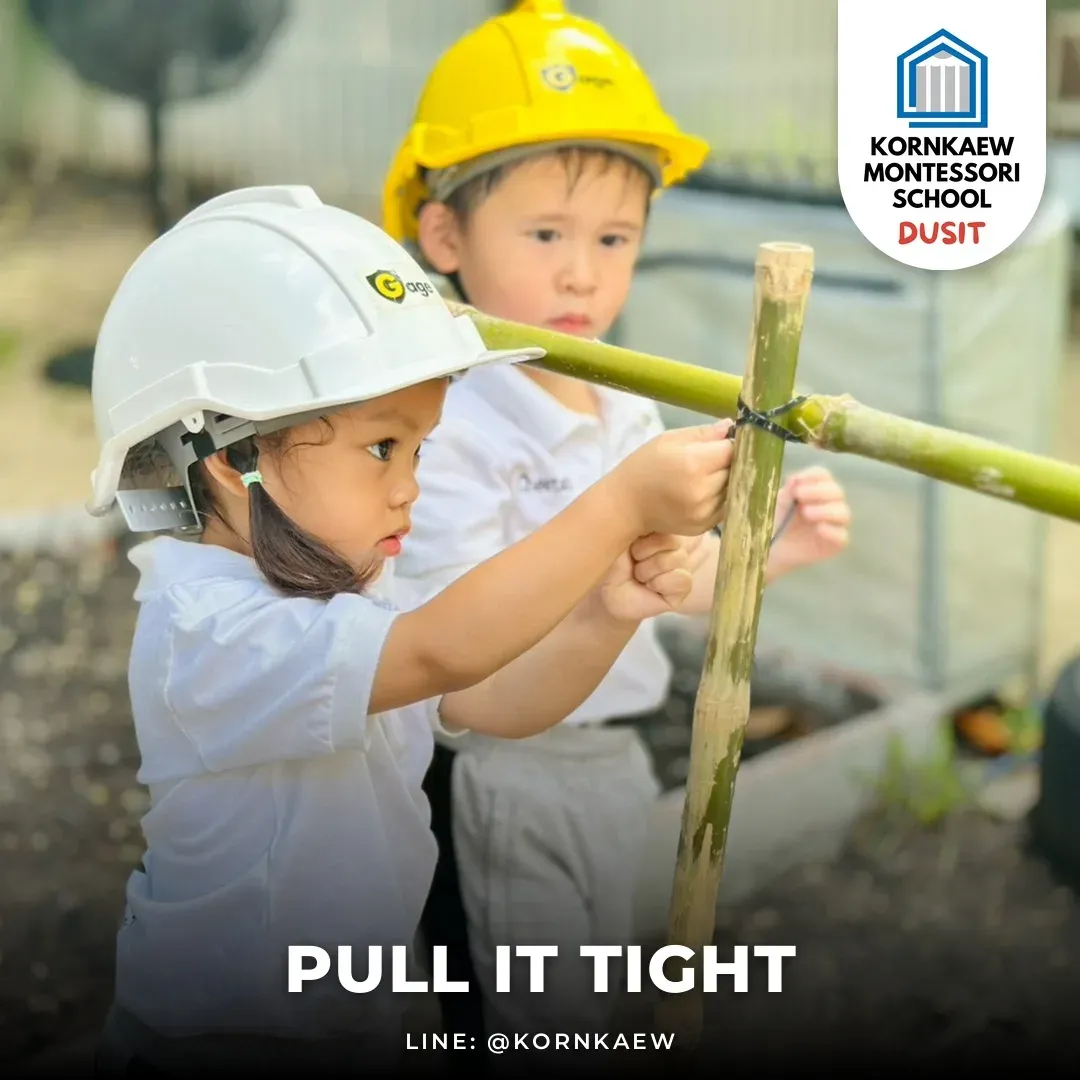
A frame is only as strong as its joints, and every joint comes down to small fingers threading a tie and pulling until nothing shifts. Fiddly, unglamorous, and exactly the kind of work that grows patience.
A moment from the school every week, as we share it with our families on Facebook, Instagram and LINE.
A frame is only as strong as its joints, and every joint comes down to small fingers threading a tie and pulling until nothing shifts. Fiddly, unglamorous, and exactly the kind of work that grows patience.
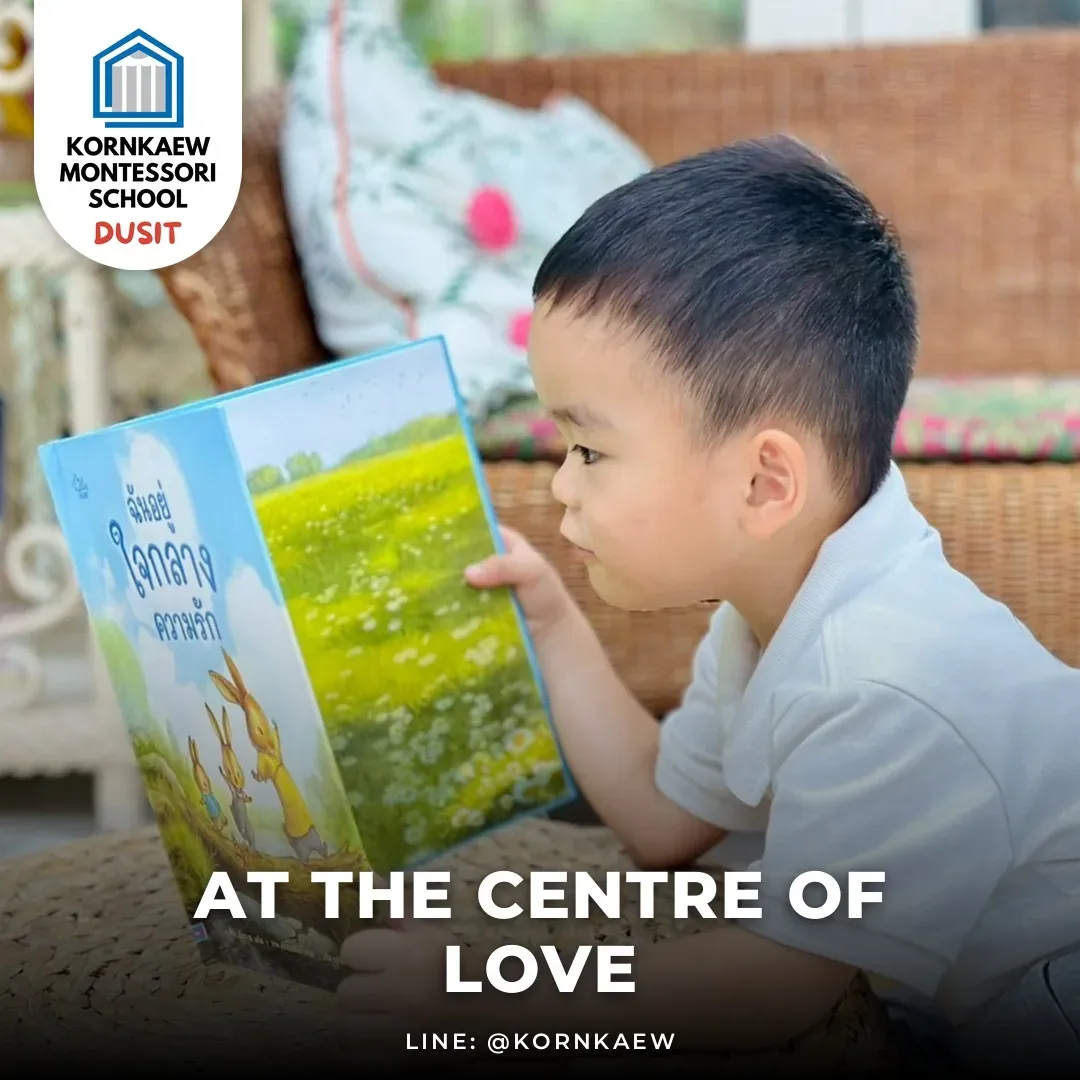
The book in his hands is ฉันอยู่ใจกลางความรัก, I am at the centre of love. That is how we want a child to feel here too. A child who feels safely held is free to concentrate, to attempt hard things and to begin again.
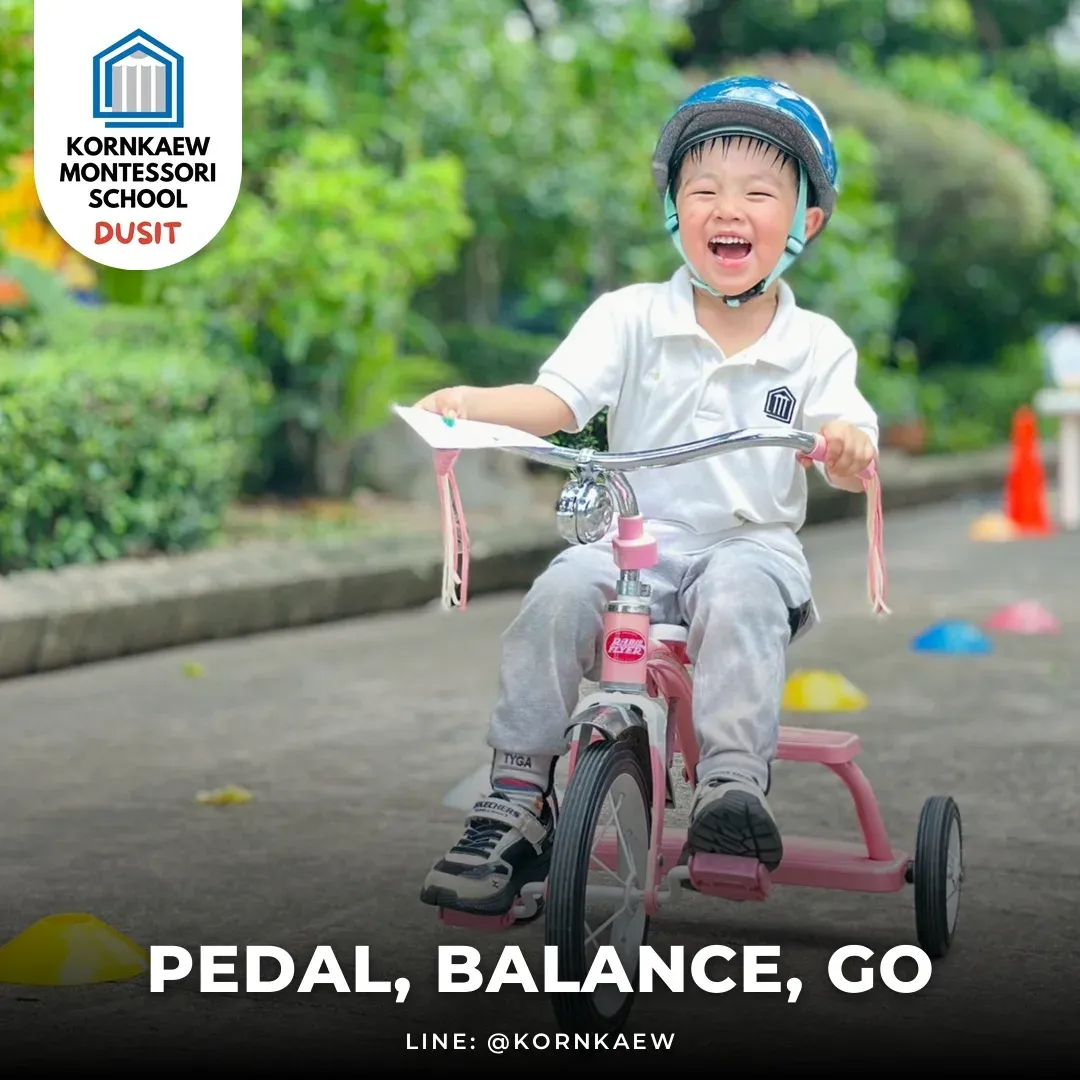
Give the ride a mission and everything sharpens. Balance, steering, judging the gap, stopping in time, all of it in service of a job that has to be finished. Some days development just looks like joy.
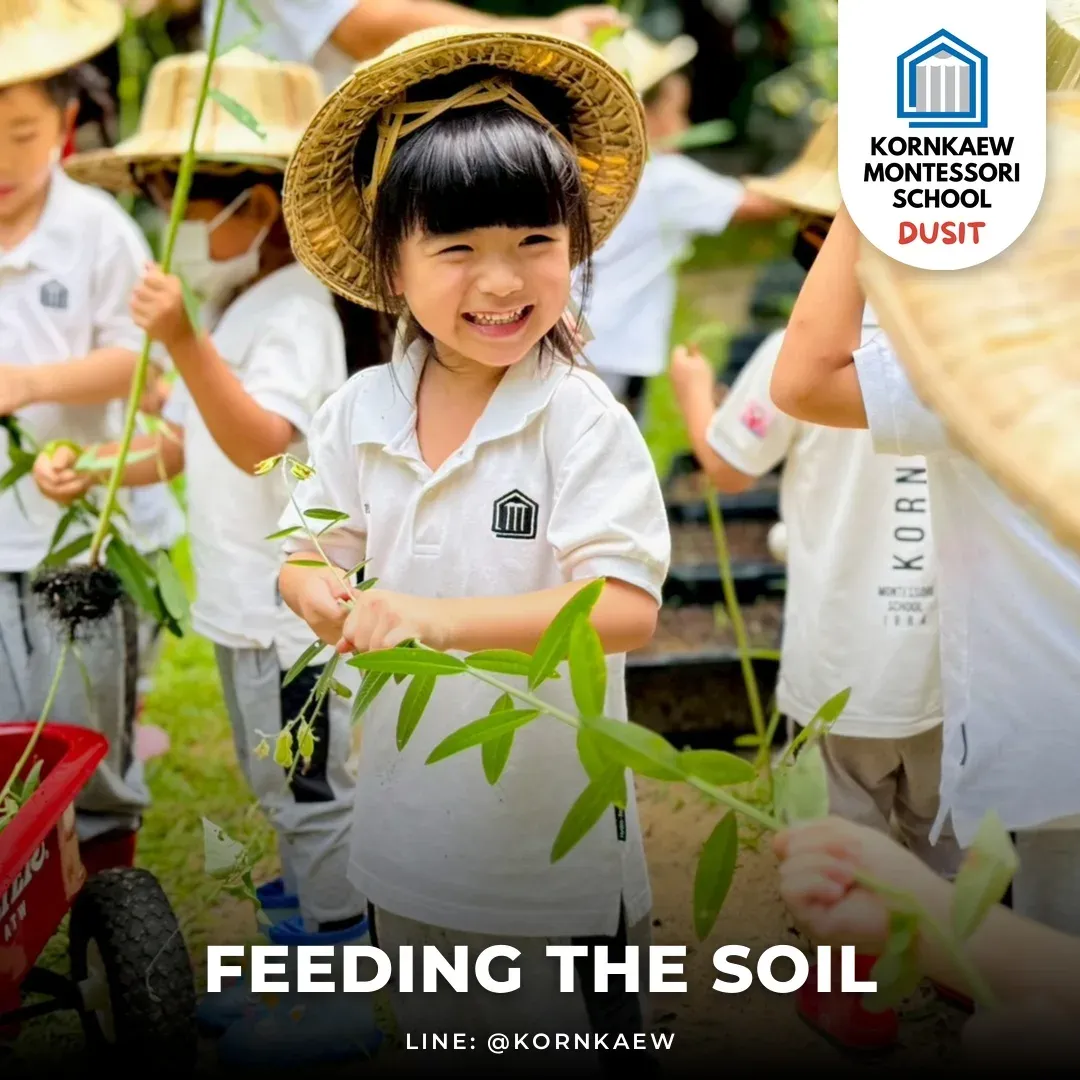
Not every crop is grown to be eaten. This one, sunn hemp, goes straight back into the bed, where it breaks down and leaves the soil richer for the next planting. A garden is a cycle, and children who tend the soil understand that long before they can explain it.
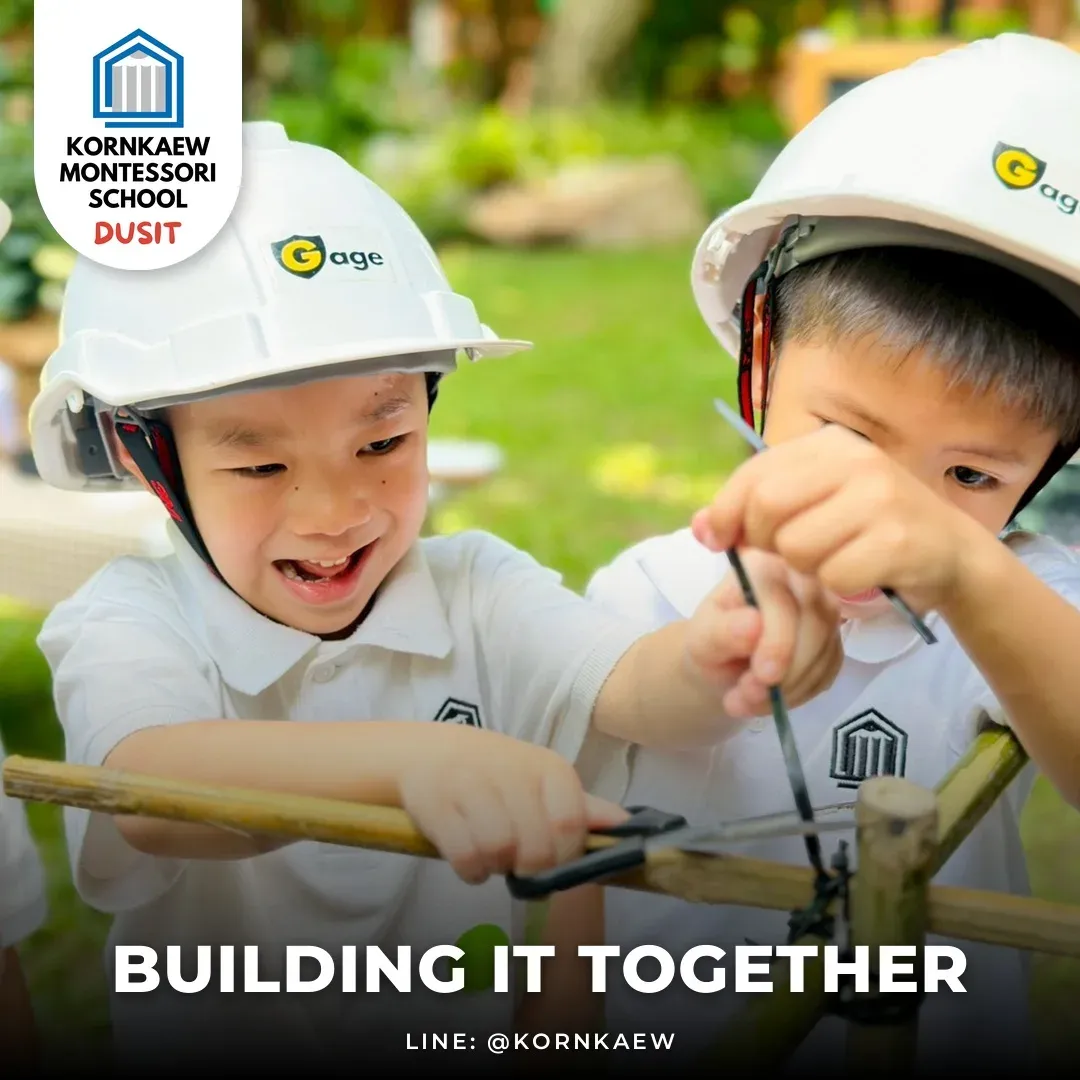
Our garden plot needed a frame, so the children are building it. One steadies, one fastens, and neither job works alone. Real tools, real purpose, and pride they earned themselves.
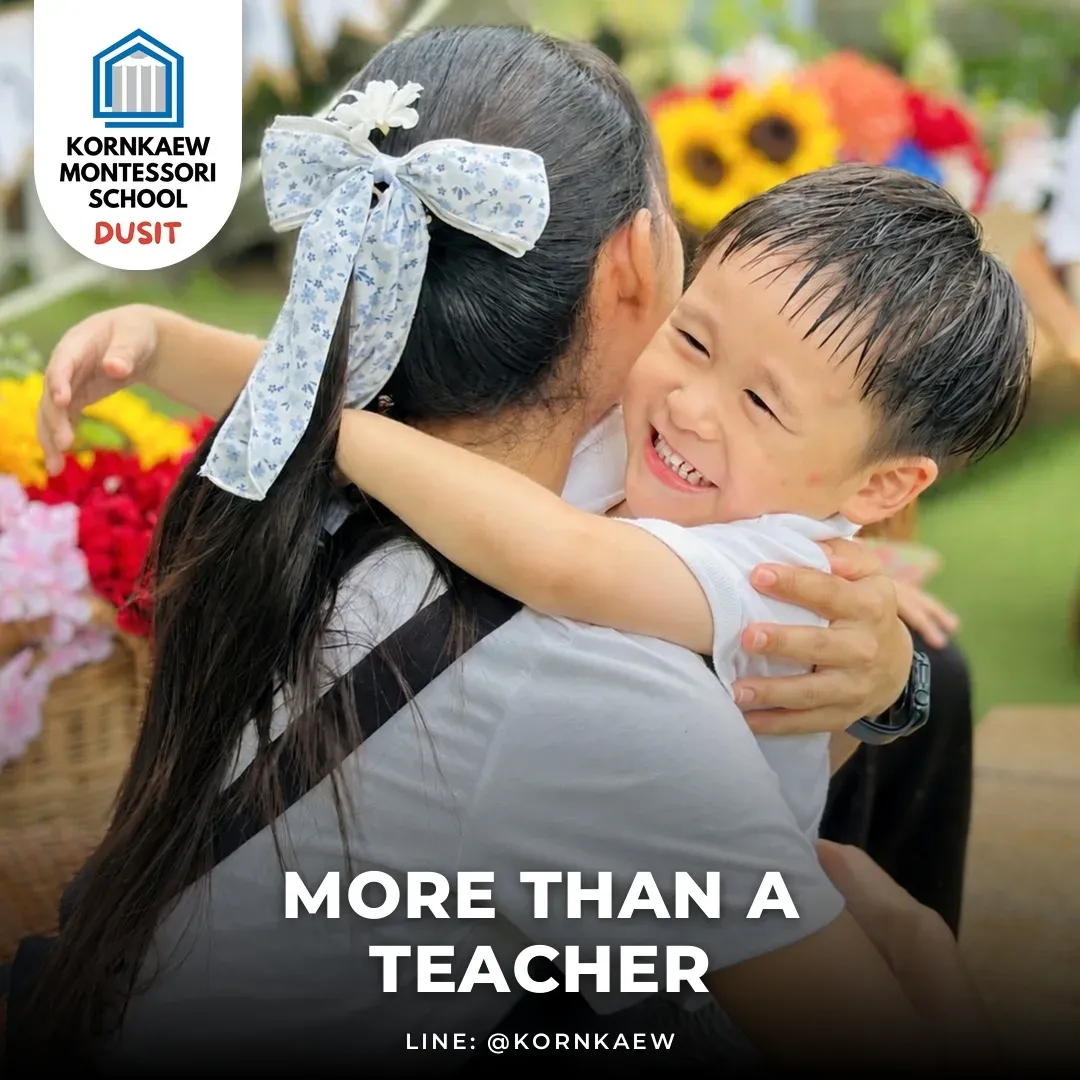
Once a year Thai children thank their teachers formally. This is what it looks like the rest of the time. Children learn most readily from the people they love and trust, so this bond is not a pleasant extra here, it is the foundation.
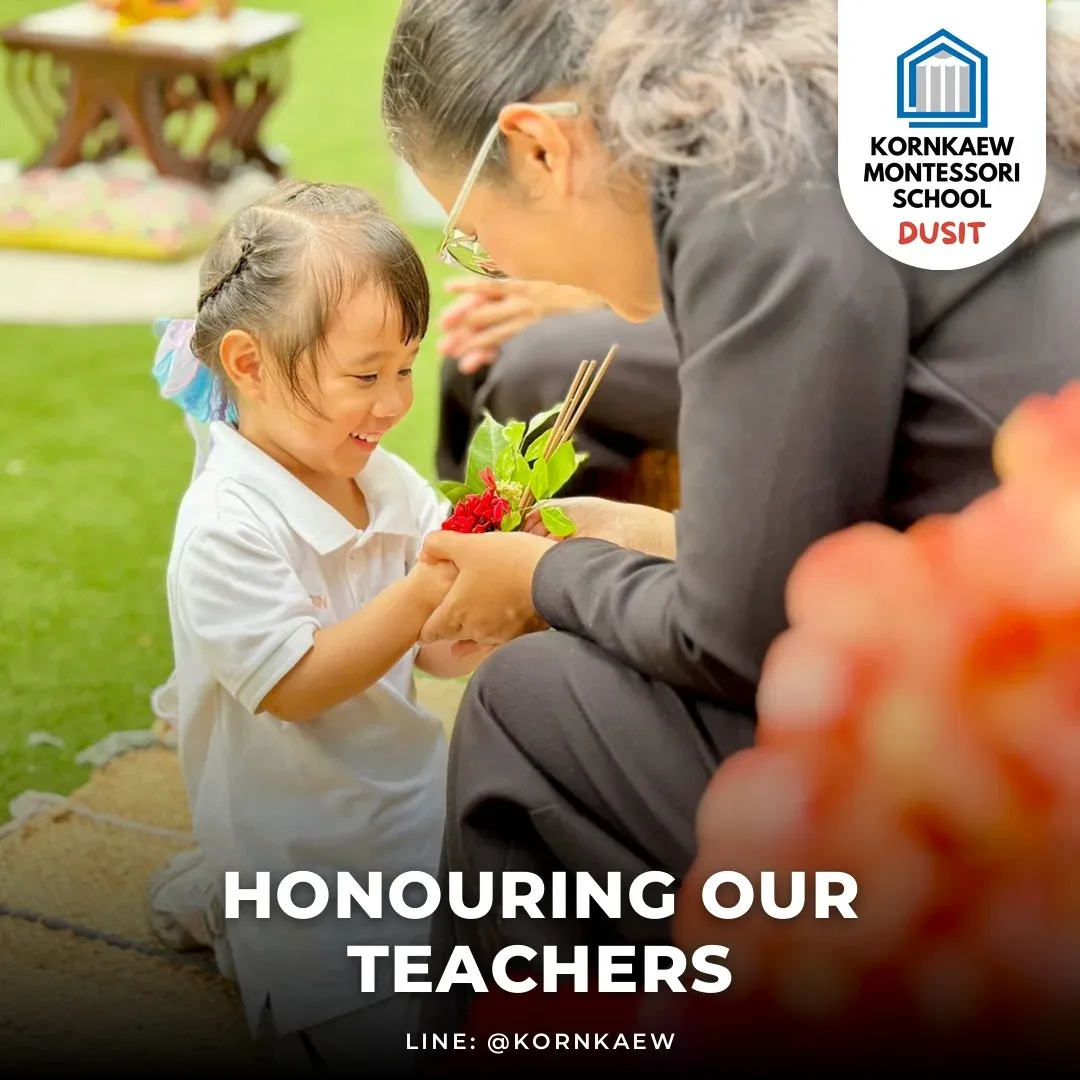
On Wai Kru day the children present flowers to their teachers and say thank you properly. Gratitude is easier to feel than to explain, so we let them practise it. Growing up inside Thai traditions gives a child something steady to stand on.
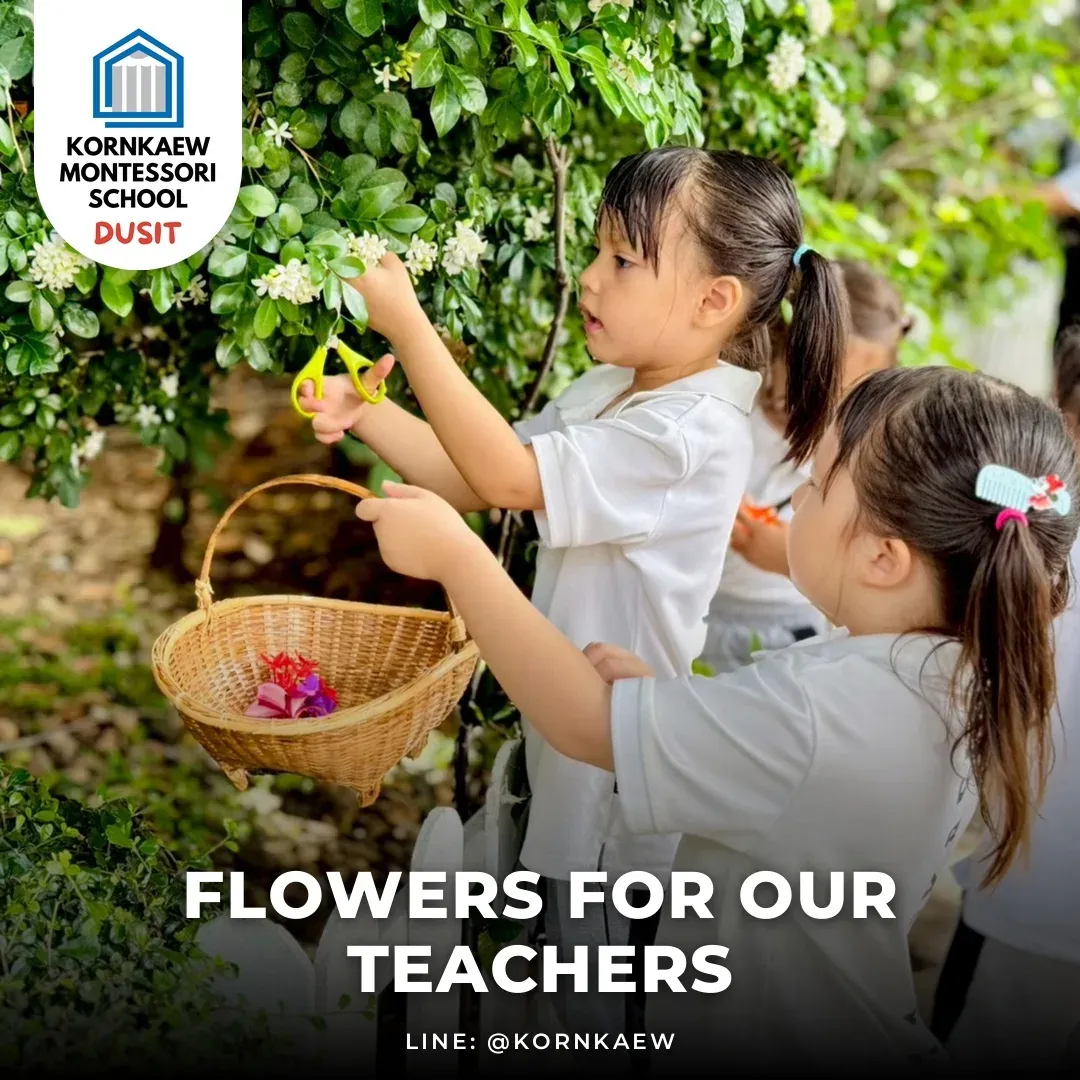
In Mandarin class the children gathered the flowers and grasses that go into a Wai Kru offering cone, learning the Chinese name for each one from the real thing in their hands, then practising 感恩老师, thank you teacher. Vocabulary learned this way tends to stay, and so does the reason behind it.
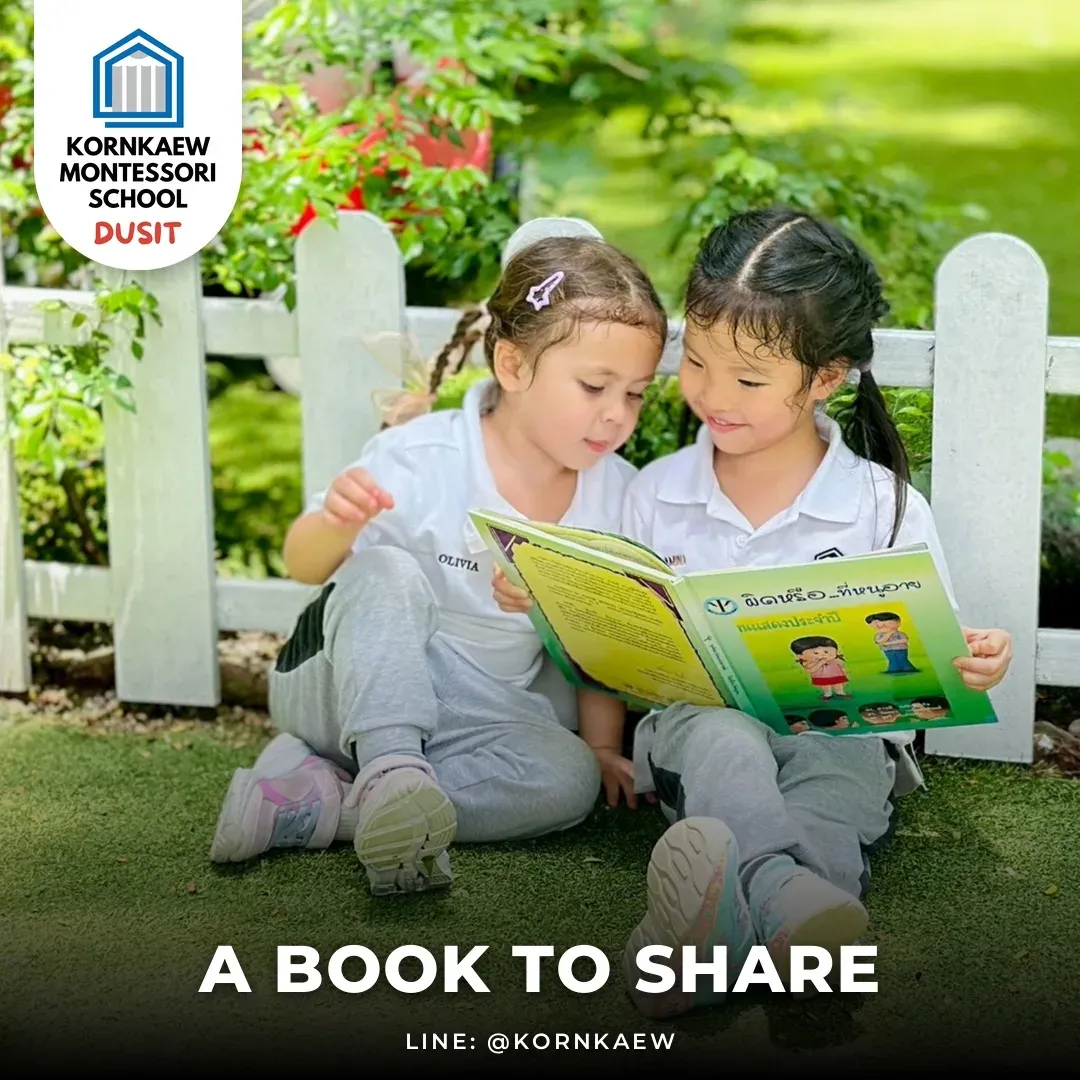
A love of reading rarely starts with a lesson. It starts like this: two friends, one book, and the quiet pull of wanting to know what happens next. Sharing a story builds language, listening and connection, and it lets children discover that reading is something to enjoy, not a task to finish. A small moment from a morning at Kornkaew, Dusit.
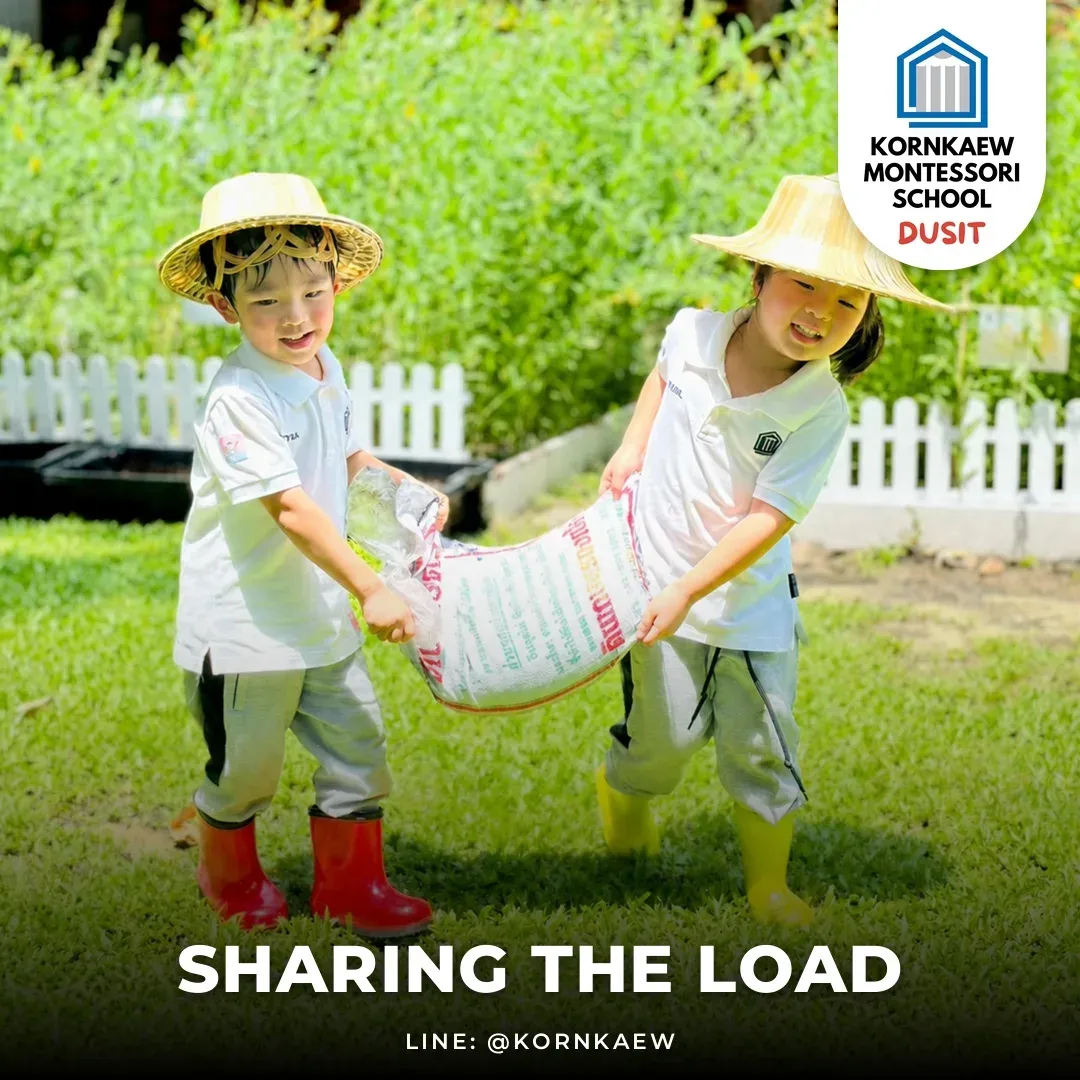
Give children real work to do together and something quietly grows. Carrying a heavy sack of soil across the garden to ready a bed for planting takes real teamwork: sharing the weight, matching each other's pace, seeing the job through. In Montessori we call this Practical Life, and it builds the focus and cooperation that reading and maths are later built on. An ordinary morning in the garden at Kornkaew, Dusit.
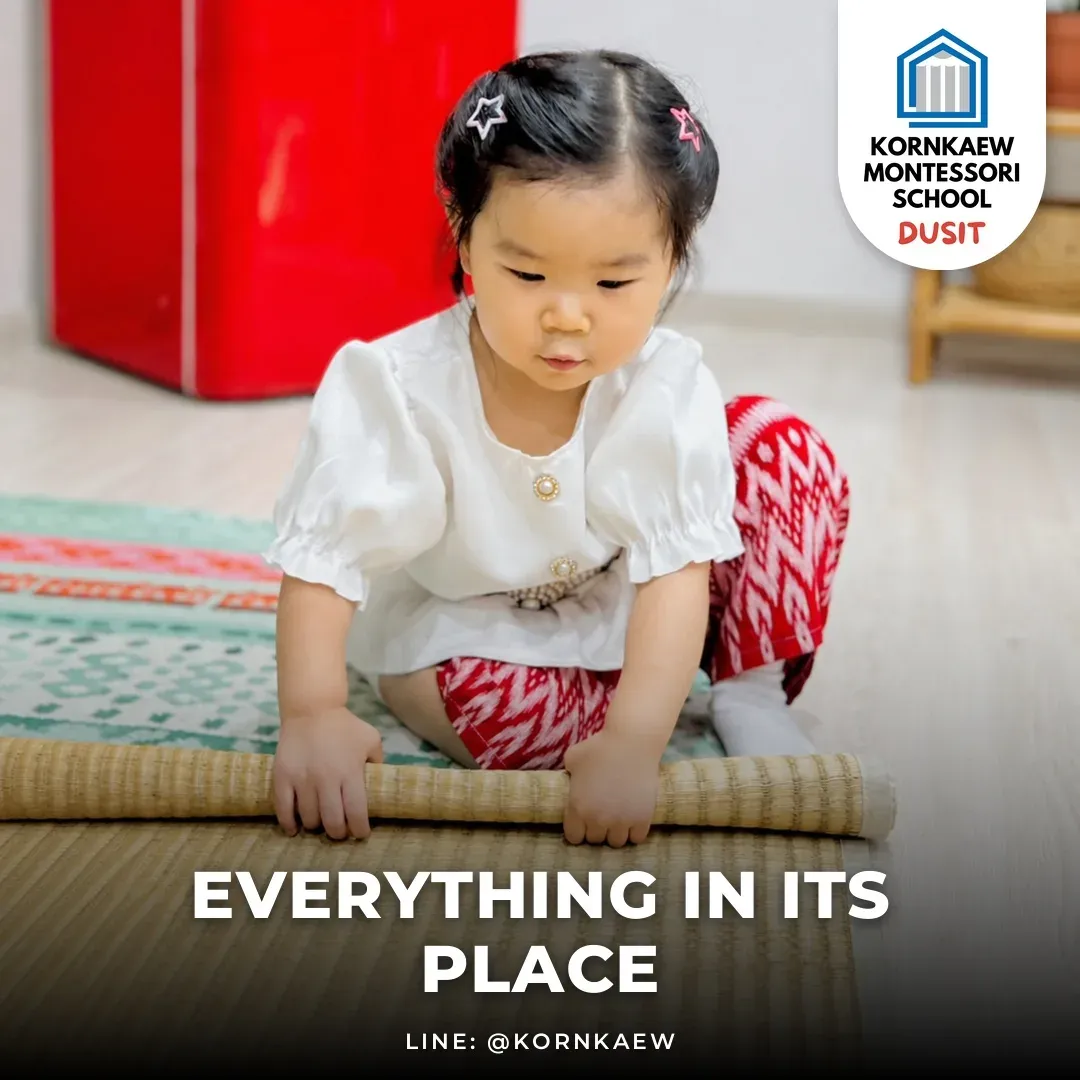
Order in the room helps build order in the mind, as Montessori put it. So when her work is done, a child rolls up her own mat and returns it to the basket.
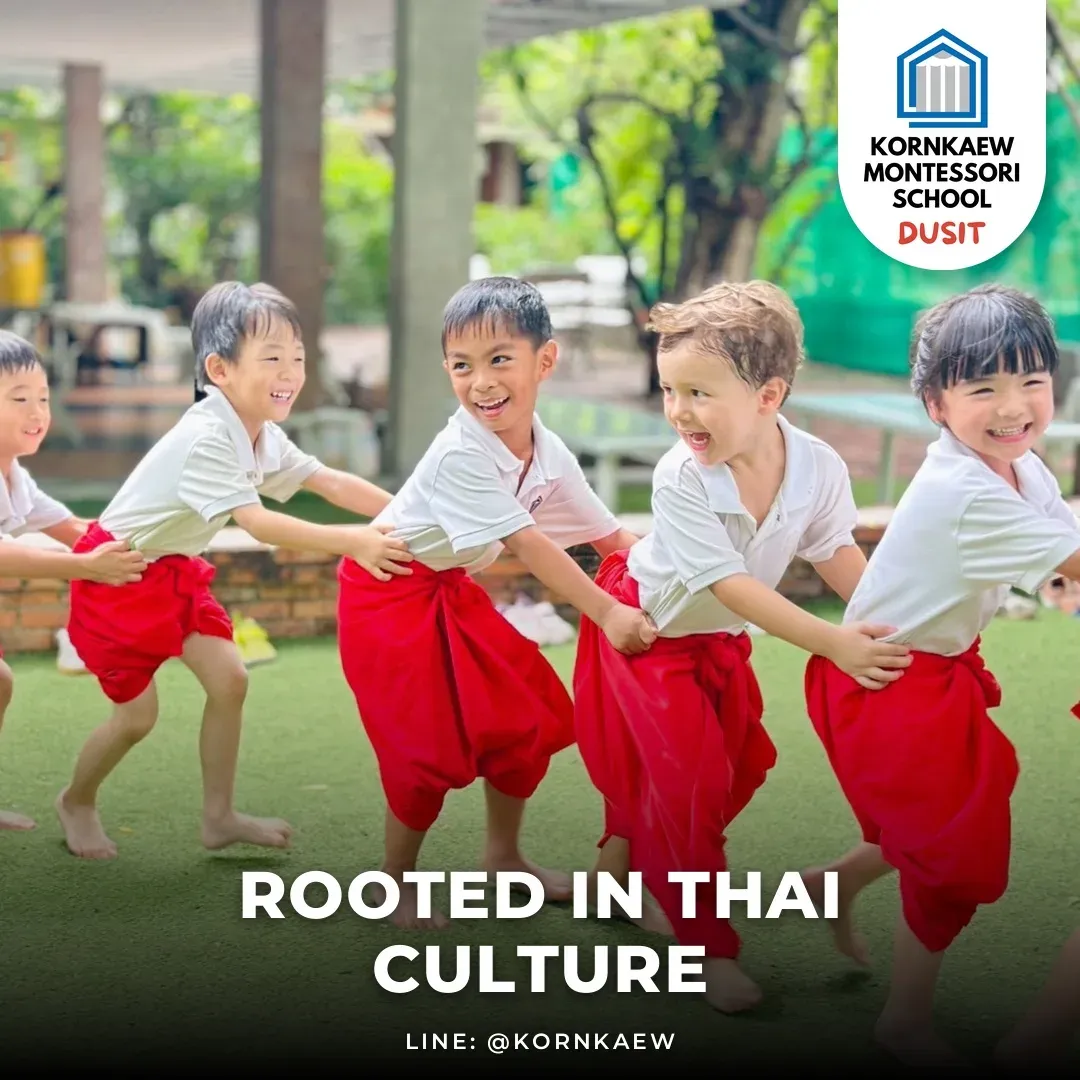
A child who feels they belong meets the world with confidence. In Thai dance and traditional games, children in โจงกระเบน move to a rhythm that builds coordination, memory and listening, while the old games teach turn-taking and language. For some these are their own roots; for every child, they grow curiosity and respect for cultures beyond their own.
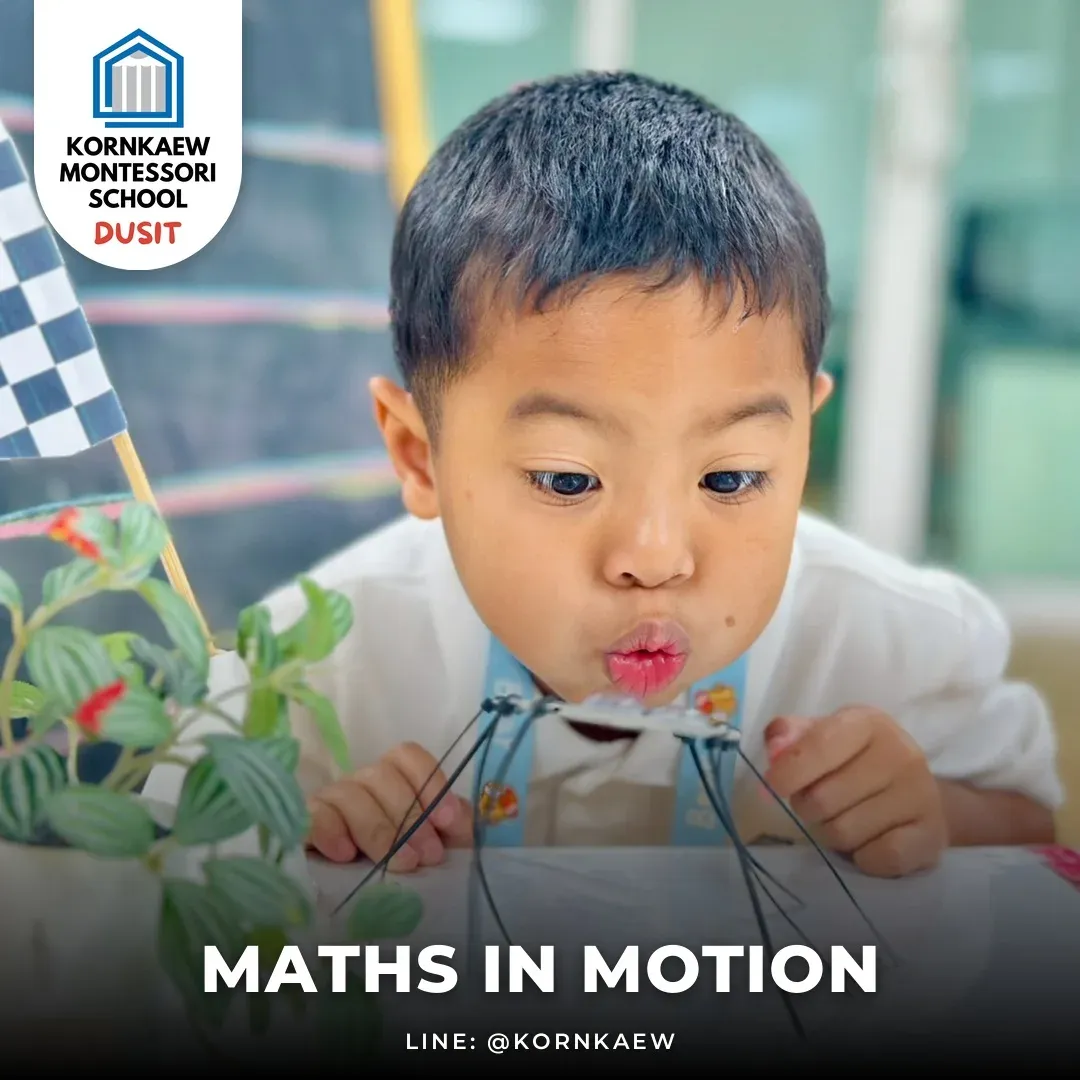
It looks like a game, and it is also a real maths lesson. A puff of breath sends a paper spider down the track, and the children measure how far it travels, record the result, then order and compare. Soon they spot a pattern: the further the target, the more puffs it takes. Estimating, comparing, spotting patterns, this is where maths truly begins, learned by doing.
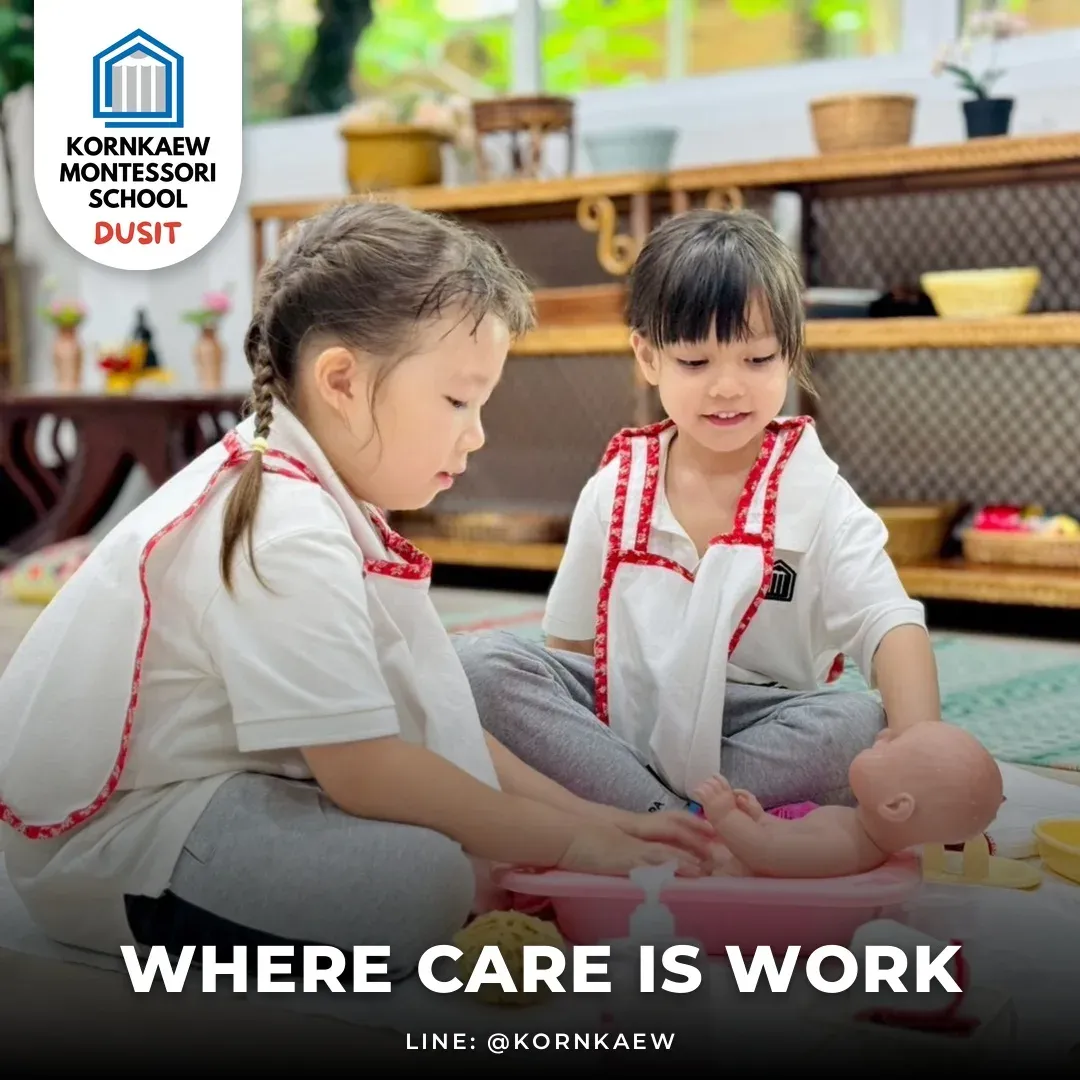
Bathing a baby doll teaches something no worksheet can: empathy. In Montessori we call this Practical Life. Washing, pouring and caring build real focus, coordination and the patience to see a task through, the same foundations behind reading and maths. An ordinary day at Kornkaew, Dusit.
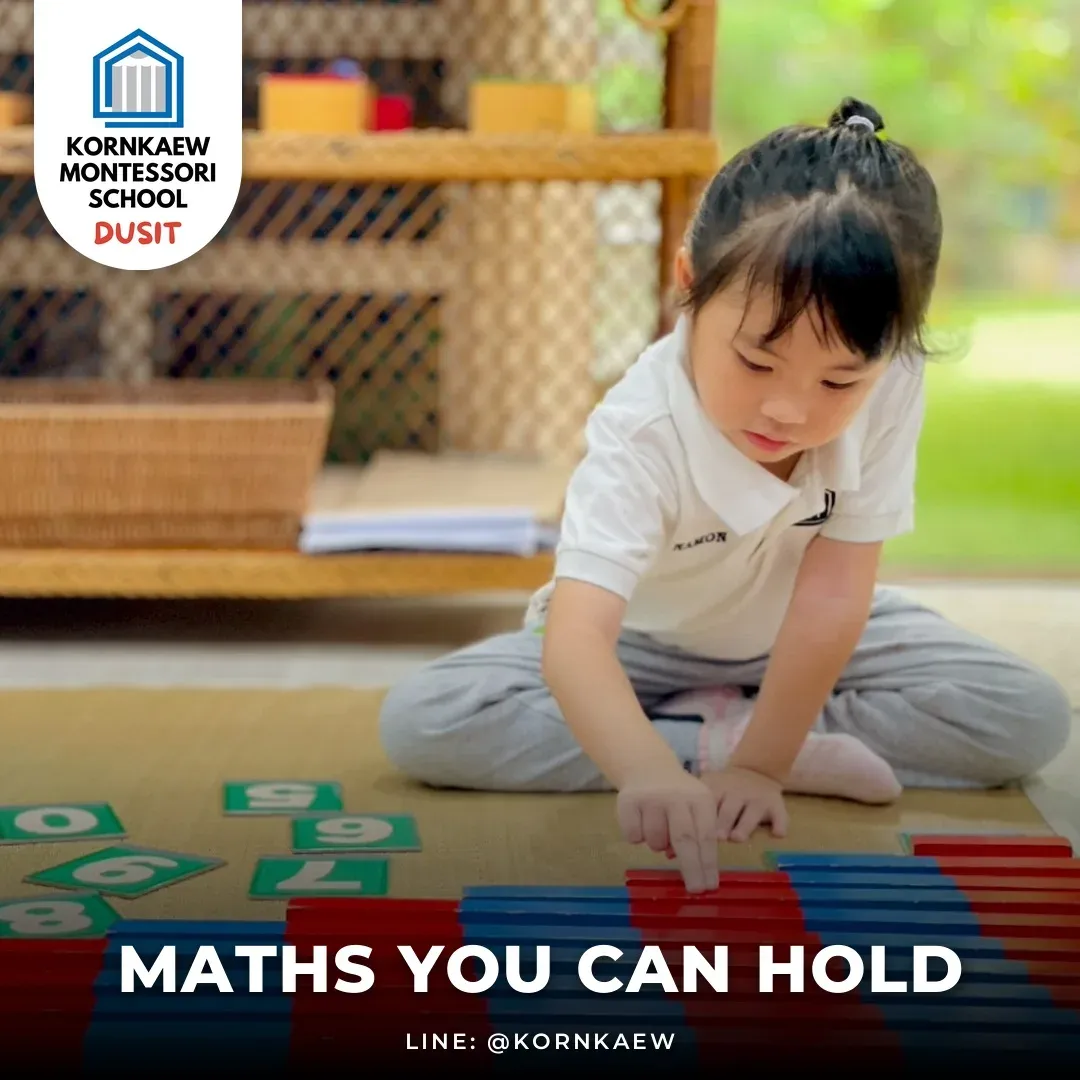
Before a number is a symbol on a page, it can be something a child holds. With the Montessori number rods, children build a real, physical sense of how numbers grow and compare. Each child chooses this work and moves at their own pace, with no rush and no test. This is how Montessori teaches mathematics: through understanding, not memorising. A concept that is felt as well as seen is one that lasts.
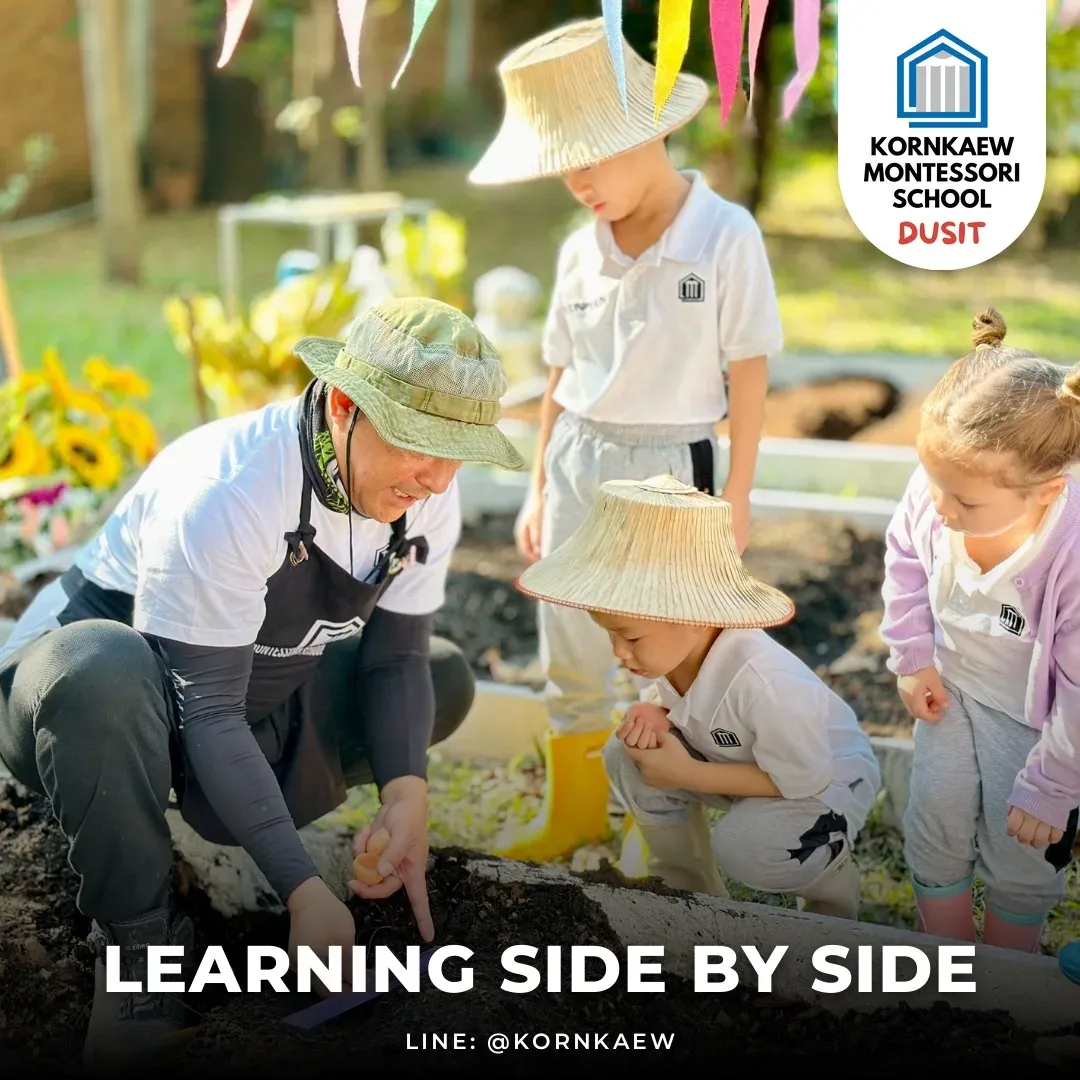
Here, the teacher is right down in the soil with the children, at their level and discovering alongside them. At Kornkaew, this is what a lesson looks like. Our teachers work with only a few children at a time, close enough to follow each child's curiosity and answer it the moment it appears. They guide, they listen, and they wonder together with the children. That closeness is what holistic care really means.
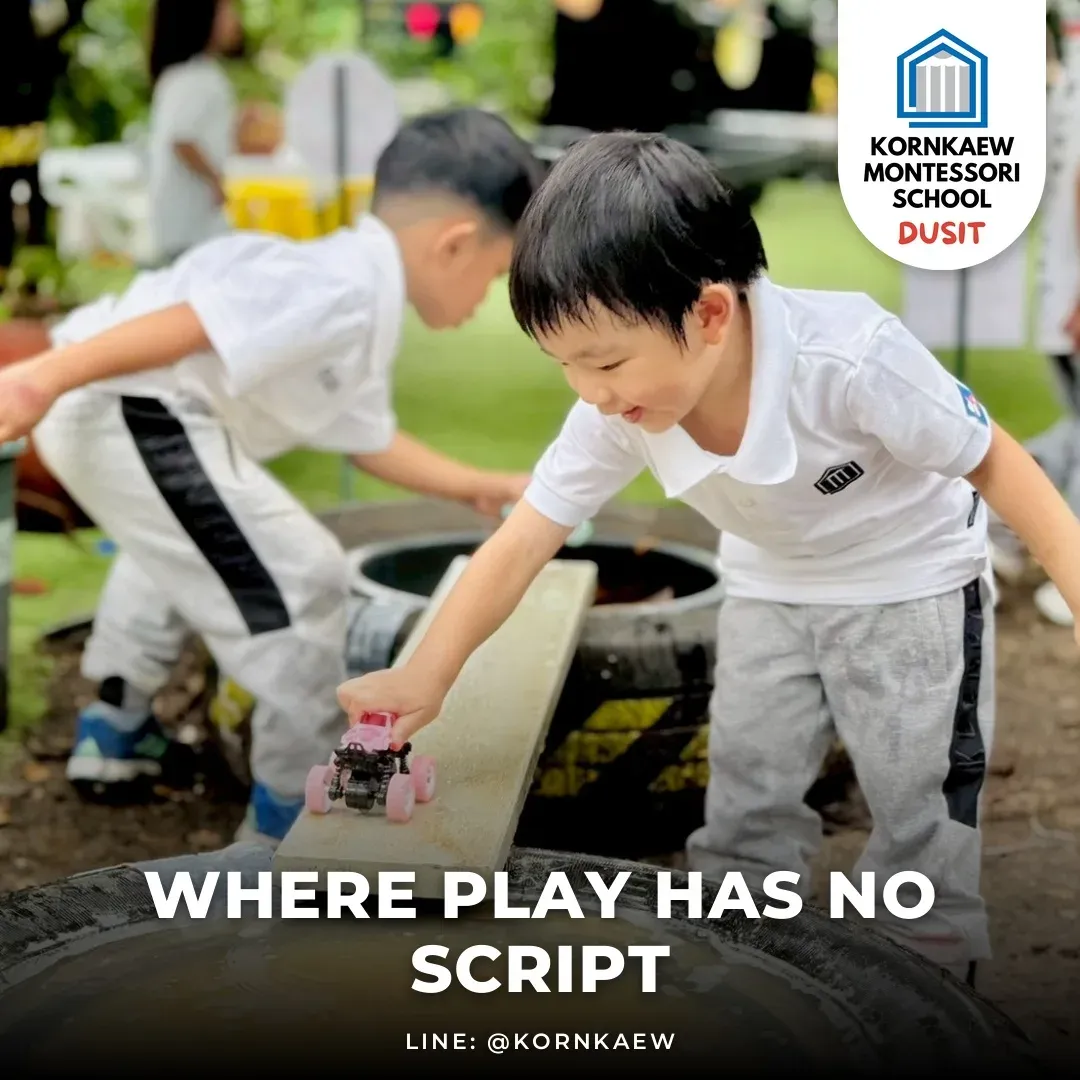
Give children an open-ended space and watch what they build. In our Creative Play Space there are no instructions and no single right answer. Children design their own games, test an idea, watch it not work, and try again. Sending a toy car down a ramp they built themselves, they are learning to experiment, to solve problems, to think creatively, and to share the space with friends. These are the quiet foundations of a confident, capable child.
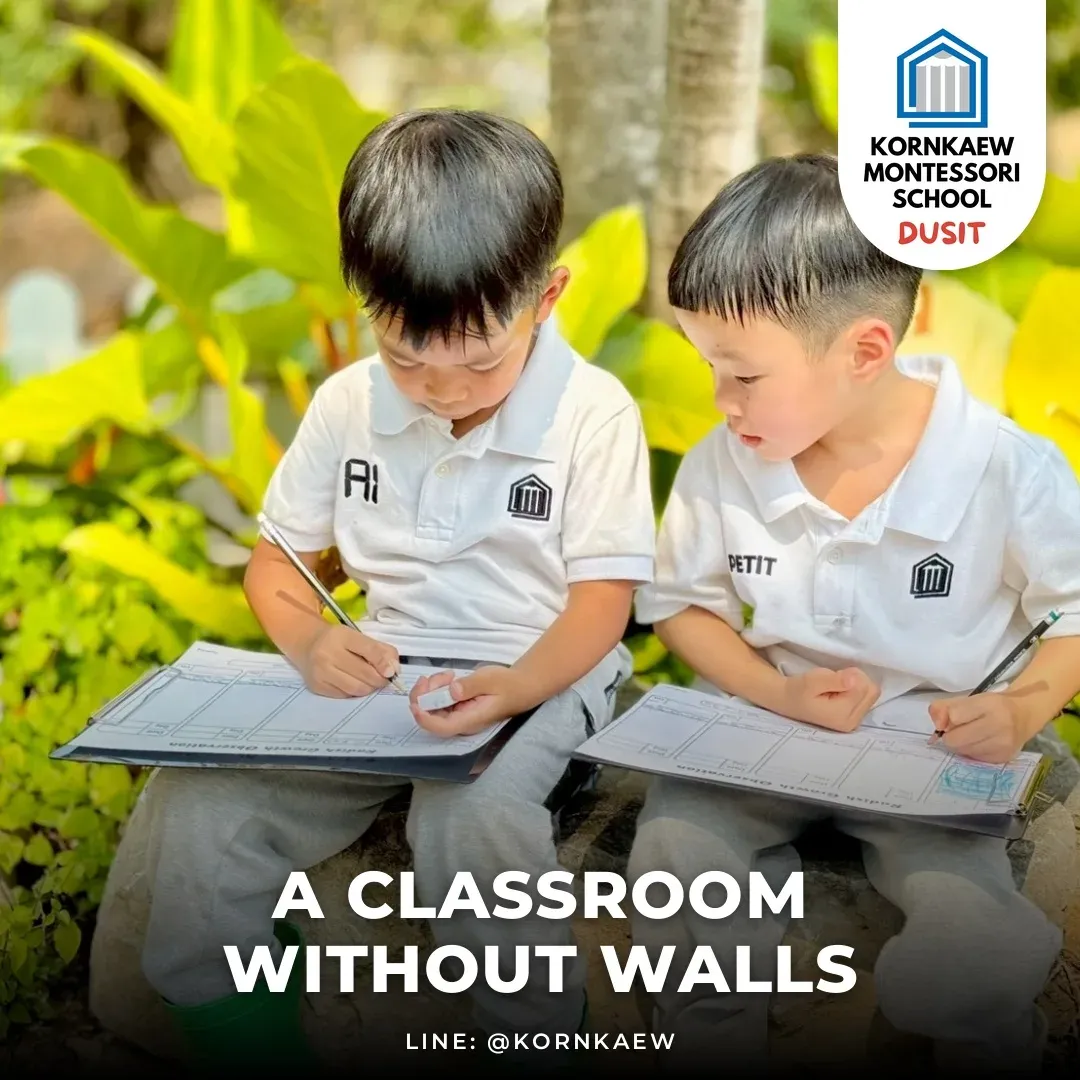
At Kornkaew, the classroom is not a room. It is the whole school. Here, children are at work outdoors, clipboards in hand, because the entire campus, indoors and out, is where learning happens. They observe, record, and discover with nature and the open air all around them. Learning here is something children do with their hands and their senses.
See Kornkaew for yourself on a private visit.

Assessed and accredited by ONESQA. Appointed a Montessori Demonstration School in the Thai context in 1999 by the Office of the Education Council, Ministry of Education.

A member of the Thailand Association of Montessori Schools, established 1997.