Farm ecosystem
Where learning takes root.
The farm ecosystem is one of the three pillars of Montessori X: a working farm, run by children, where learning grows out of real responsibility. Its home is Farming, the morning activity: children plant, tend, feed, observe and record. It reaches the afternoon too, in the Entrepreneurship lesson and in Food science, where children cook what they have grown. What the farm produces is eaten or sold at the market, and if the seedlings are not watered, they wilt.
One living ecosystem
The garden, the hens and the mealworms are all looked after by the children, and what the farm produces goes to the kitchen and the market.
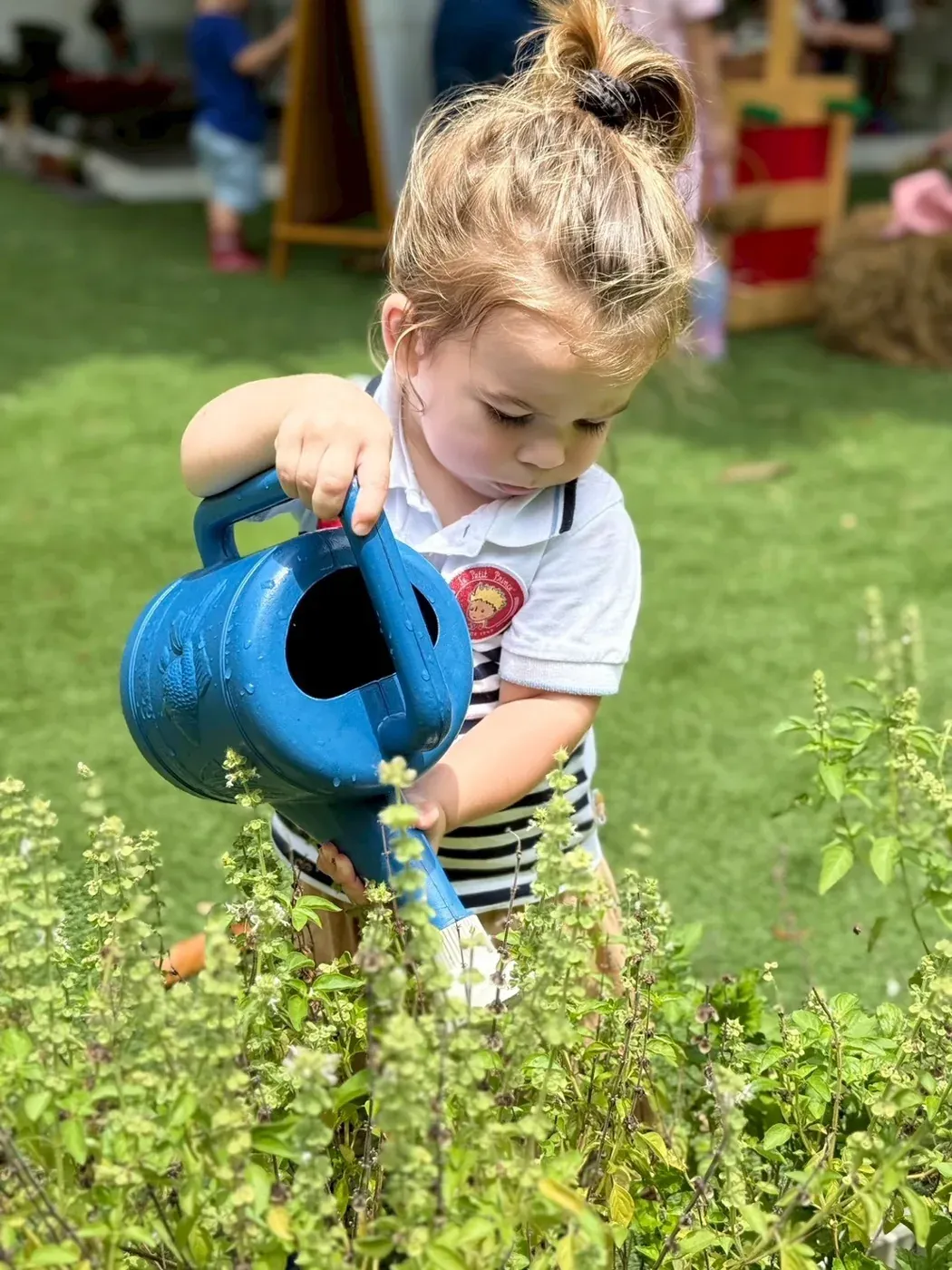
The garden Beds turned, sown and weeded, each plot a child's own. Miss a morning's watering and the seedlings show it.
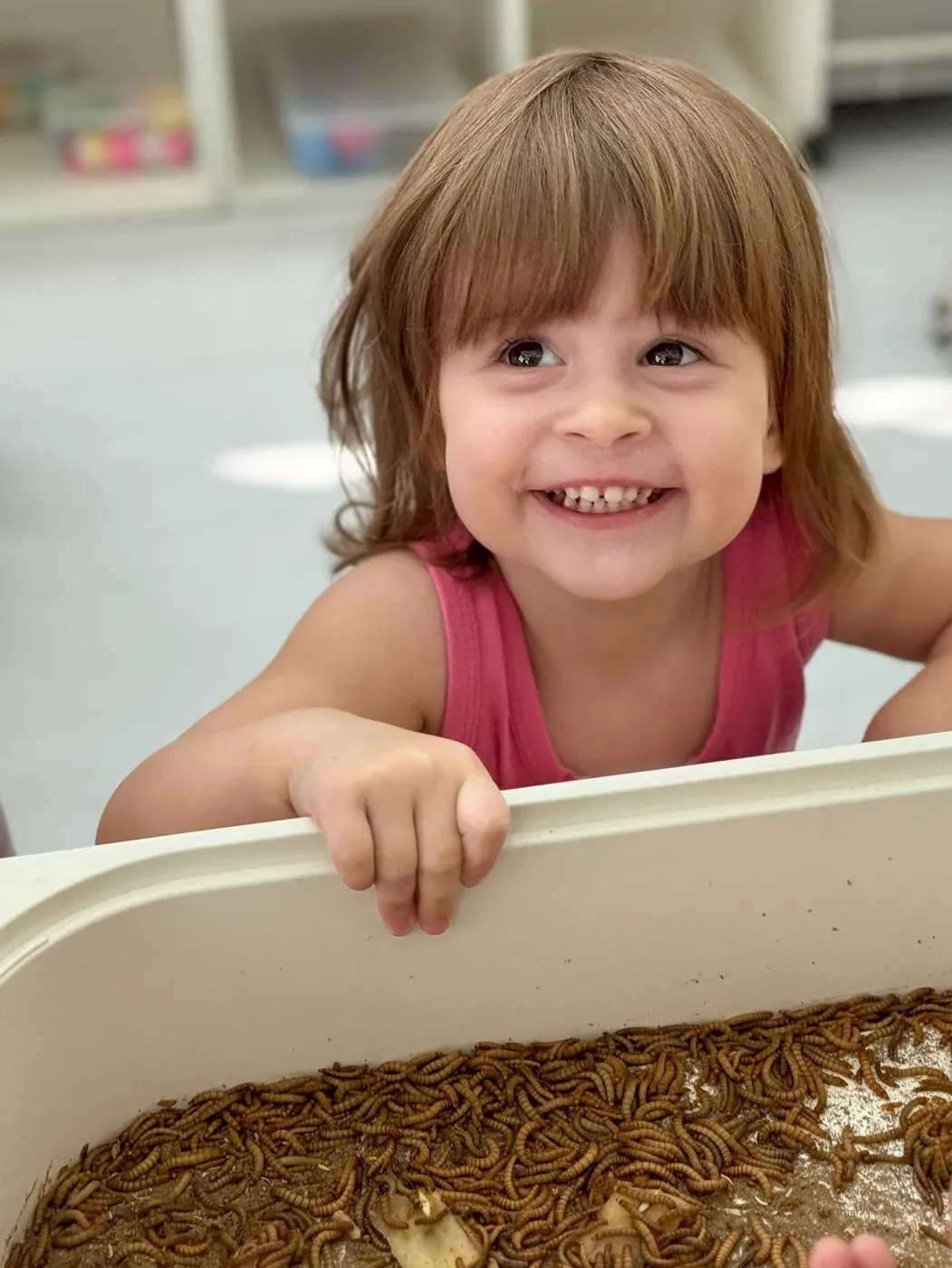
The mealworms A colony kept from egg to beetle, with trays to keep clean and every stage to sort as it changes.
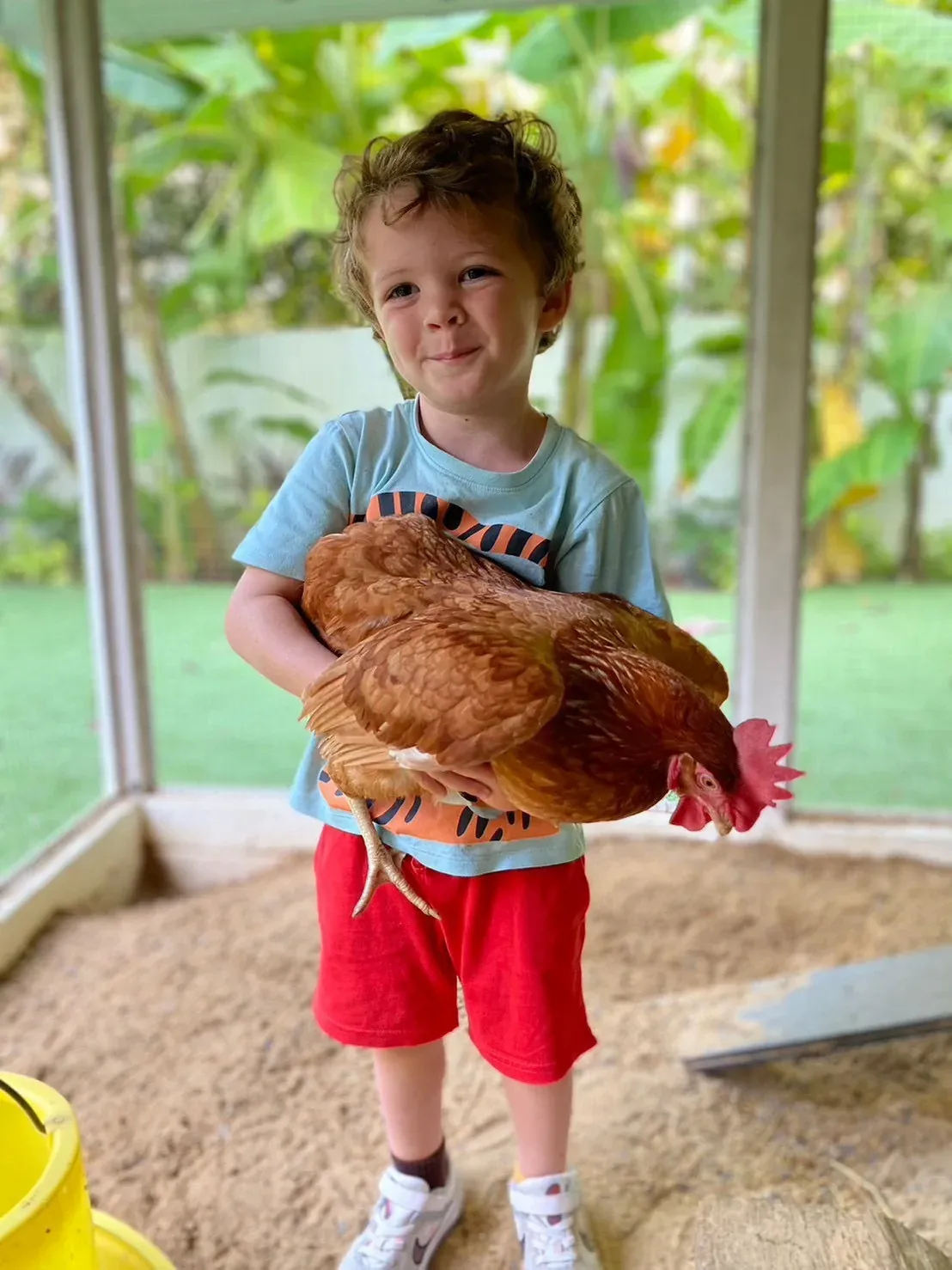
The hens Fed and looked after every day, their eggs collected and counted with Montessori beads.
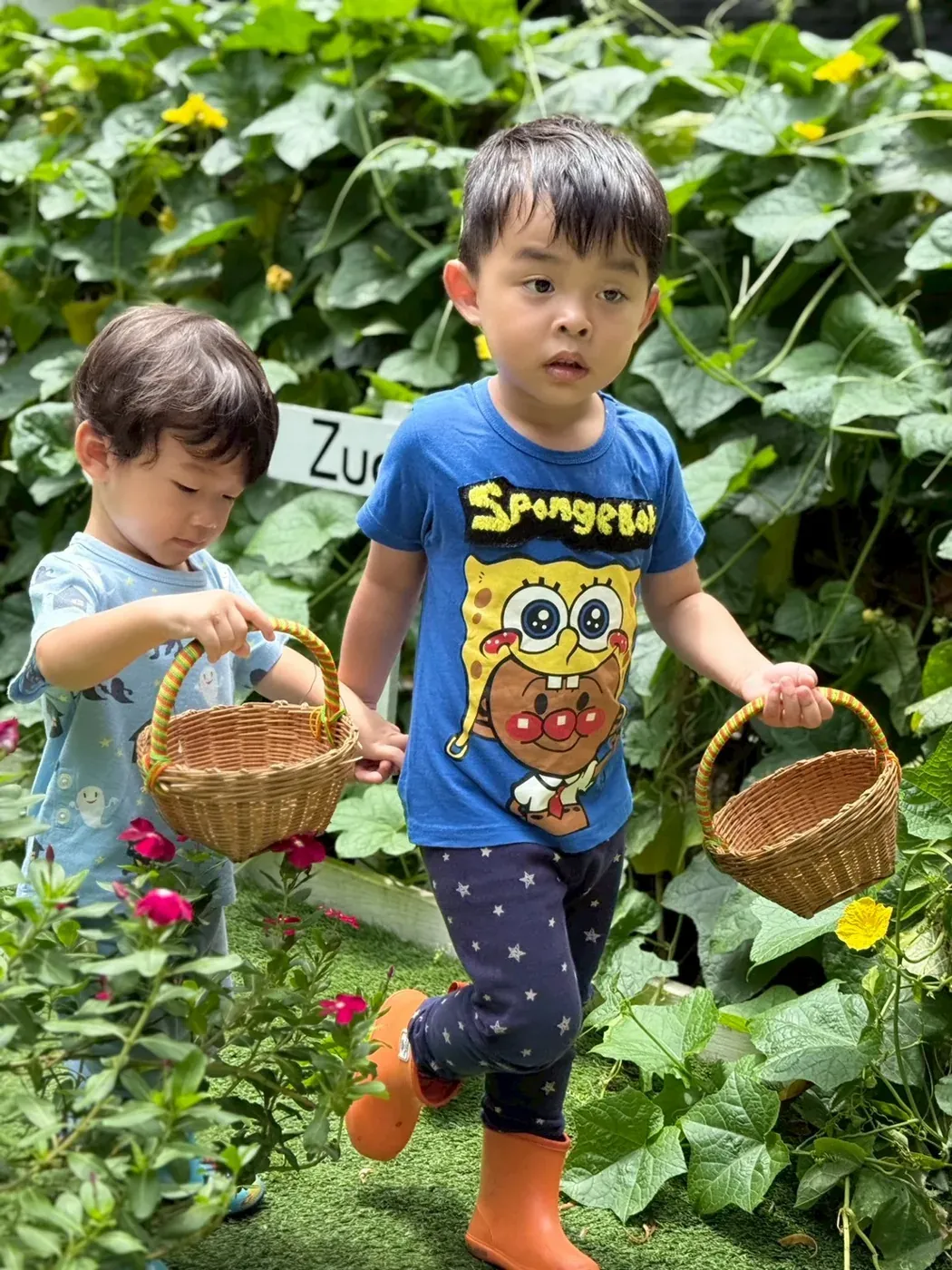
To the market Picked, counted and weighed, then carried to the kitchen or to the KIMS Market to sell.
What is grown is eaten or sold, the beds are turned again, and it starts over.
The mealworm ecosystem
Alongside the garden and the hen house, children breed and raise mealworms, and care for them through every stage of their lives: from egg to larva, from larva to pupa, and from pupa to darkling beetle, whose eggs begin the cycle again.
The life cycle itself is the point. Watching one creature pass through four utterly different forms, and learning what each form needs, is the colony’s real work. Children keep the trays clean and dry, feed the larvae, sort the pupae so they are not disturbed, and move the new beetles to the breeding tray. Each stage needs something different, so children learn to notice what a living thing needs rather than follow a single routine.
- Science. The full insect life cycle, observed first-hand: egg, larva, pupa, beetle. Children see moulting, metamorphosis and breeding, and learn why each stage looks and behaves as it does.
- Mathematics. Counting and sorting larvae, measuring growth, recording how long each stage takes. The colony produces real data, and children keep the record themselves.
- Language. Observation journals, real scientific words used properly (larva, pupa, metamorphosis), and the daily practice of describing what has changed since yesterday.
- Character. Patience above all: a pupa cannot be hurried. Gentleness, because larvae are fragile. And responsibility of the truest kind, since the colony depends on its keepers completely.
What it adds up to
Nothing here is abstract. A child who has raised mealworms from egg to beetle, grown a zucchini from a seed and sold the hens’ eggs at the market has walked a real life cycle and a real economy from end to end, and can explain both.
Part of Montessori X
Farming ends at the KIMS Market, where the farm meets the entrepreneurship ecosystem: what the children grow, they trade. And every seedling that fails and every harvest that has to be shared out fairly is a small problem to solve, which is how the future-ready skills are grown. See Montessori X on the KIMS campus page.
Visit us
KIMS (Ari Campus)
21 Ari 3, Phaholyothin Rd., Phaya Thai, Bangkok 10400
Tours run outside school hours, so you see the classrooms and the grounds without disturbing the children.
Book a private tour